Giveaway: How Sweet it Is

I didn’t think we’d get a honey crop this year. My bees swarmed three times (that I know of) and I’m sure several more times that I was blissfully ignorant of. Don’t they know they’re supposed to give their landlord (me) notice when they move out??? Of the three swarms I knew about I caught only one, thanks to a helpful iPhone video my husband sent me showing me which tree the swarm had landed in, and with the much appreciated assistance of my bee savvy neighbor Jeff  who came over to help capture them.

"frame of honey and brood"

Honey “ceiling” above brood–this is not a frame for extracting.

What keeps me from getting an annually consistent honey crop? Well I could blame it on the weather. We’ve had some rainy summers and cold winters. I could also say it’s the Russian bees I keep, who do so love to swarm. But to be humbly honest, my lack of an annual honey crop may have more to do with my mediocrity as a beekeeper than factors like mother nature and the million year old instincts of Apis mellifera. Many beekeeping books write about how people get into beekeeping because they’re intrigued by bees, but leave the hobby after they’ve been overwhelmed by the honey. Eight years in and I’m still waiting to be overwhelmed by a honey crop. Despite the swarms, rain, hurricane, and loving neglect my bees have suffered through this summer I still had one hive that produced for me.
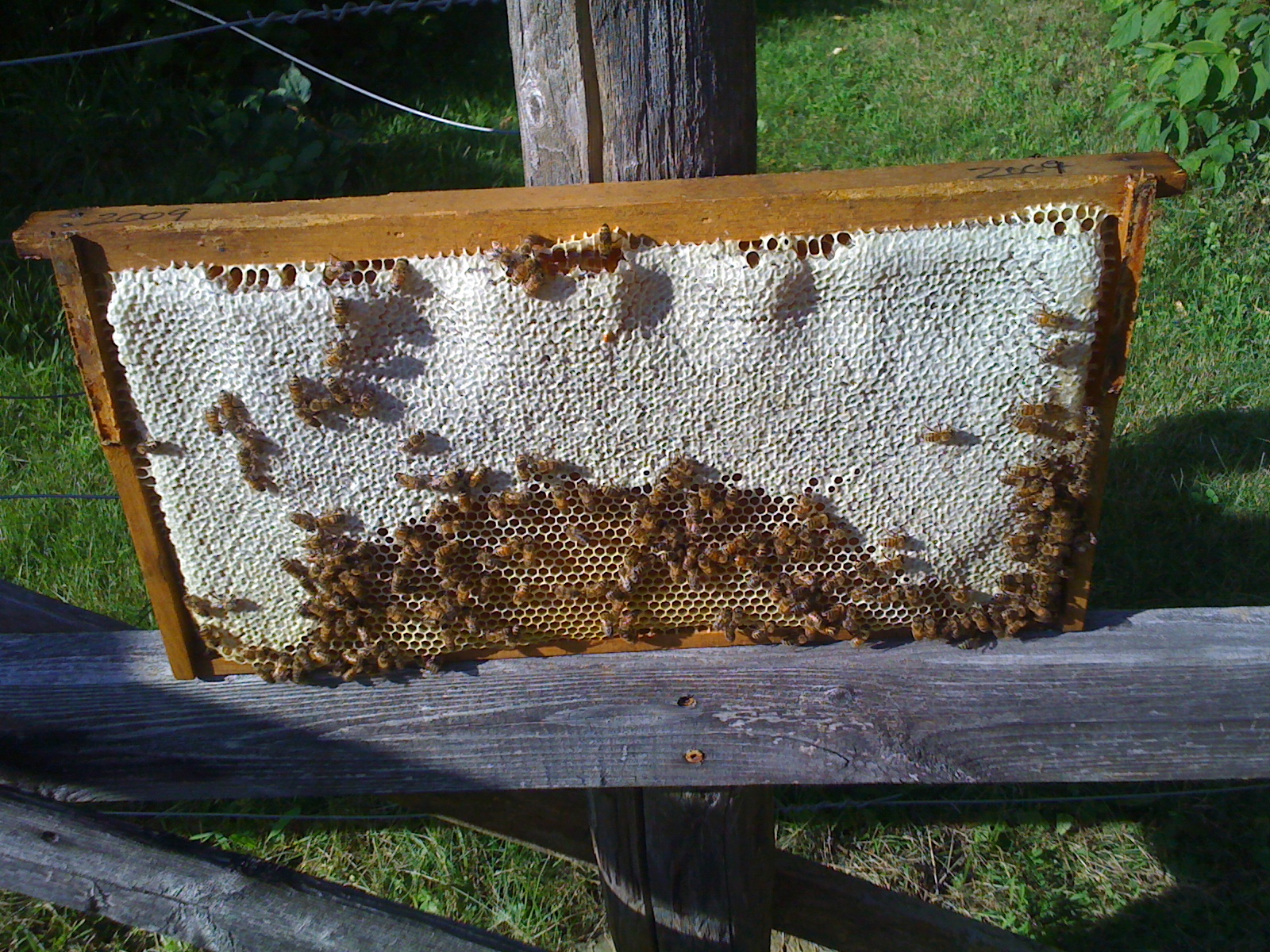
"Nearly capped honey"

Almost ripened honey.

Ideally you harvest honey sometime before or during August in New England so that the bees still have time to store up enough goldenrod honey to see them through the winter. That is unless you’re a procrastinator like me. So it was in September that I put on a bee escape. The worker bees dutifully left the honey supers for a night so they could go down and nestle in the brood supers with the queen and larvae, but come the dawn when they went to return to their work of ripening honey they were confounded by the maize. One of the joys of beekeeping is using the bees own instincts (in this case the instinct to huddle up in the evenings with the brood and queen) against them. Sneaky, yet satisfying.
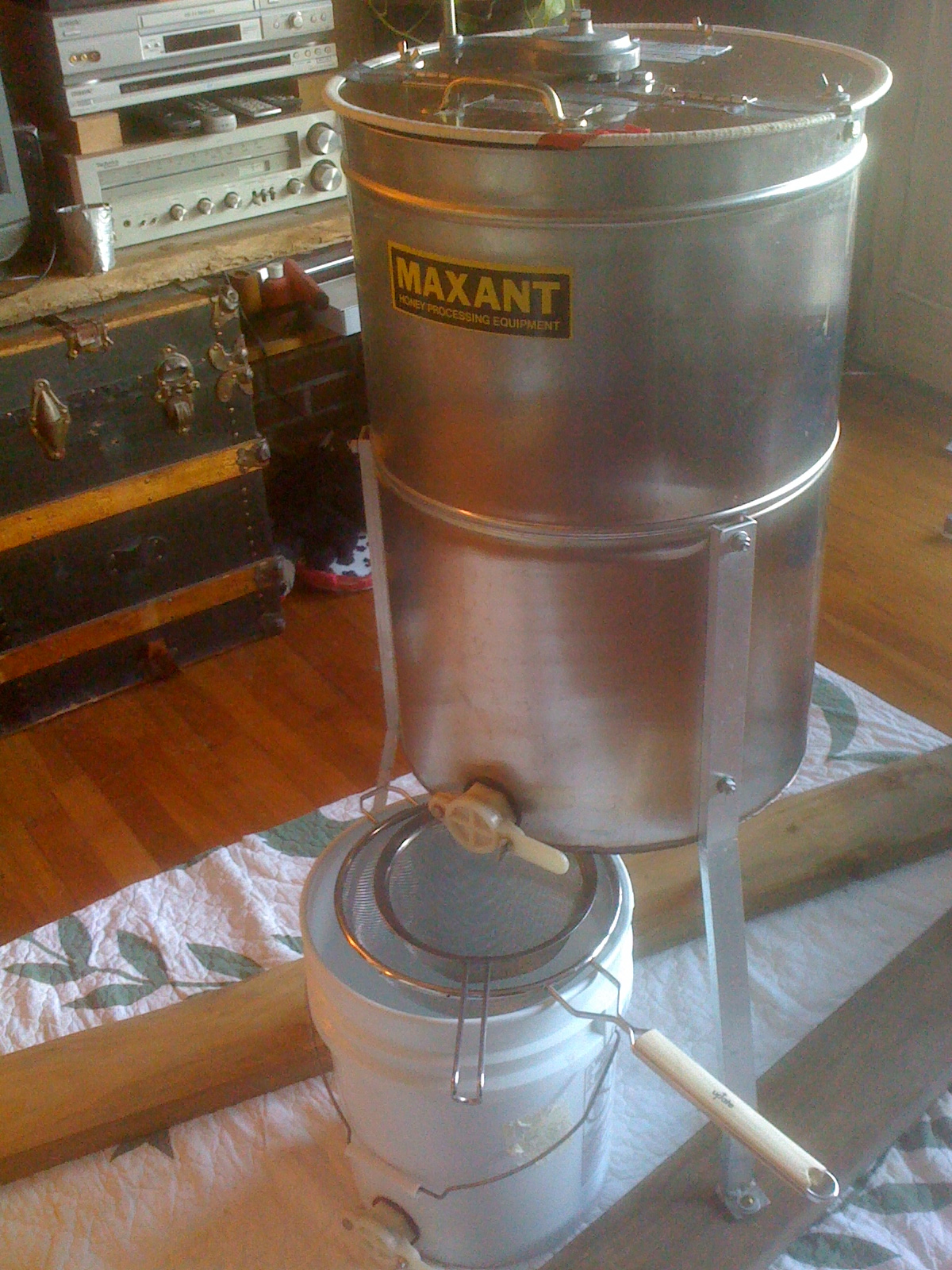
"honey extractor"

Honey extractor and honey bucket ready for this year’s crop.

I borrowed an extractor from a guy in my beekeeper’s club, then waited for a day when the kids could help. Honey extracting is more fun to do with other people. In the past I’ve borrowed extractors that were so big you had to sit on them to keep them from dancing around the room. This extractor was a two framer which my husbaqnd screwed to a couple of boards he had lying around. The set up allowed us to stand on the boards and hold the extractor in place while we whizzed the frames around and around letting centrifugal force draw the honey from the comb.

"Removing the cappings"

Removing the cappings from the honey

First we removed the cappings with a thin knife dipped in hot water. It slid right through the wax and exposed the ripened honey underneath. When bees collect nectar it is anywhere from 90-97% liquid. In order for nectar to turn into honey bees add some enzymes and amino acids from their bodies then “ripen” the nectar until the moisture content is 15-17%. The ripening process has two stages–an active stage and a passive stage. The active ripening occurs as the bees blow bubbles with the nectar, much like you would blow little bubbles of saliva with your mouth (babies are very good at spit bubbles, though they have a tendency to drool). After 30-50 minutes of bubble blowing the tiny drop of nectar is placed in a cell and other bees fan their wings to facilitate additional evaporation. This is the passive stage. Once the nectar has had enough moisture removed so that it will keep without spoiling the bees put a cap of beeswax on top (which is also created from nectar, but I’ll save that story for another day).
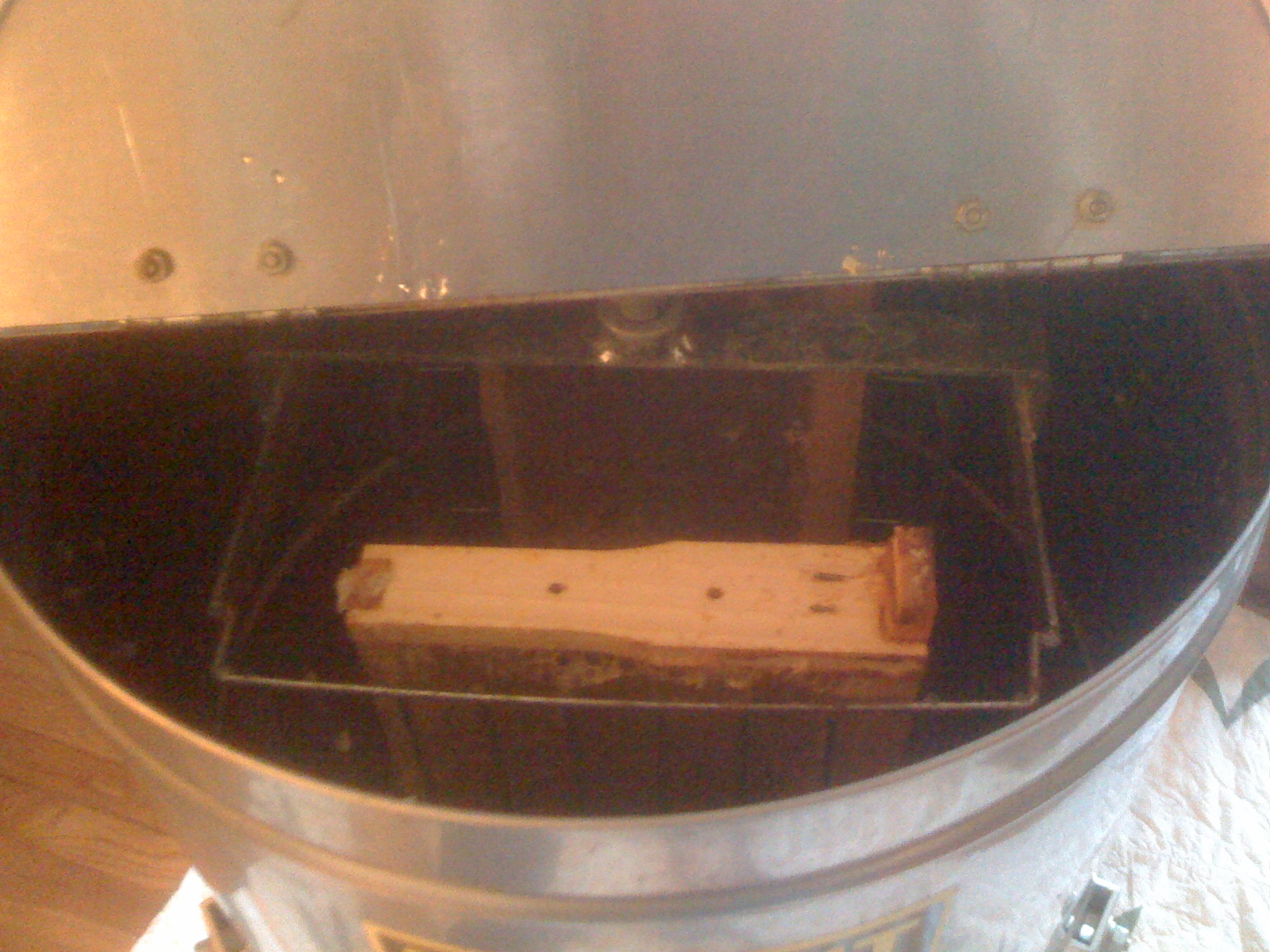
"honey frame in an extractor"

Place the uncapped frame in the extractor and…
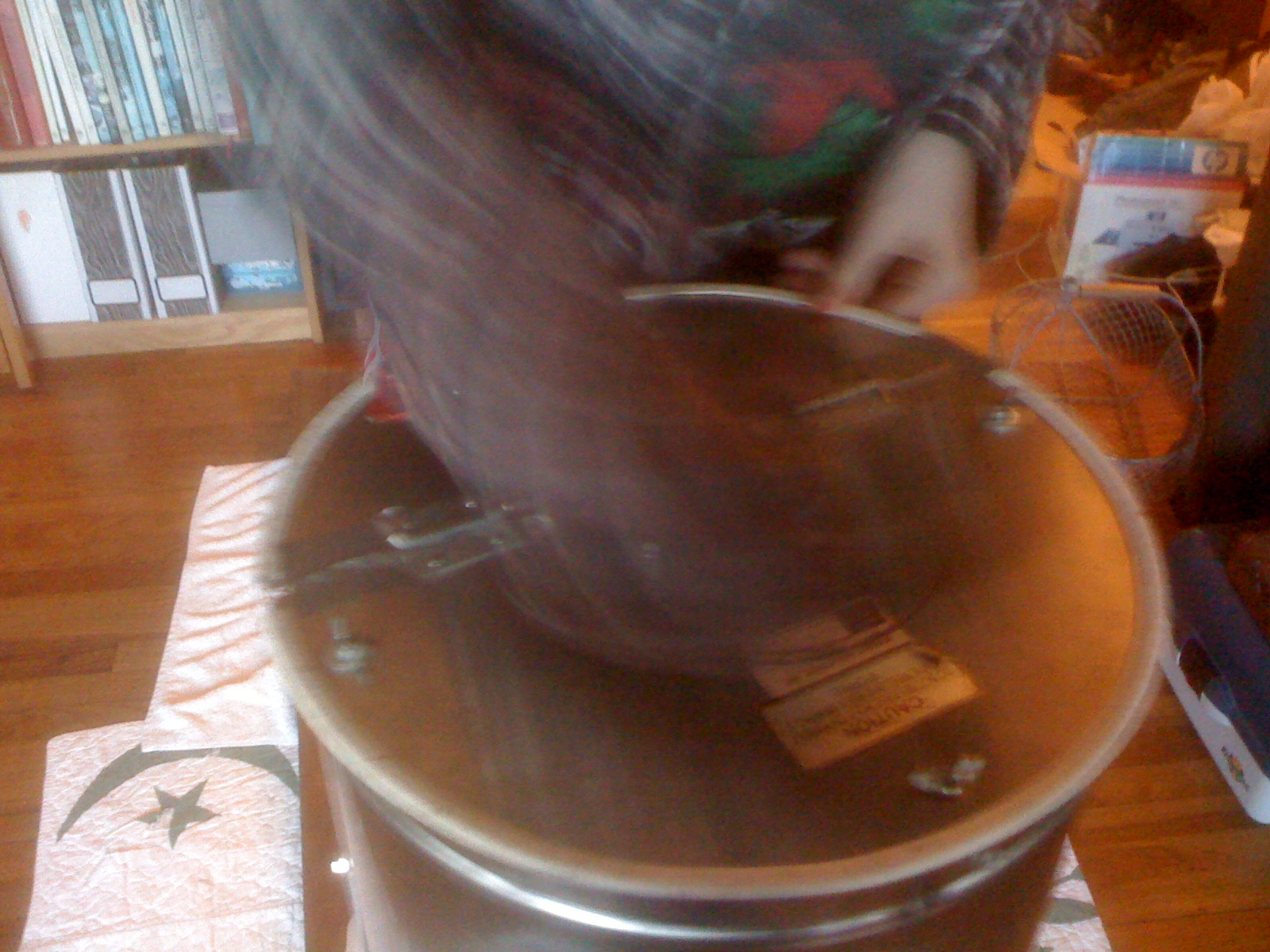
"extracting honey"

spin like crazy

Then we place the uncapped frames two at at time into the extractor. Then comes the spinning. For a successful extraction you want to spin the frames as fast as you can. It reminds me a little of the tea cup rides at the New York State Fair my brother and I loved to go on because we could make the teacups whirl so fast you thought your head was going to snap off. The liquid honey is ejected out of the cells and onto the side wall of the extractor, where it then starts oozing down the walls and gathering in the bottom of the extracting tank. When we can’t spin any more frames because there is so much honey the spinner can’t move we open the gate and watch the honey glug out. I strain it through a couple of sieves to catch little bits of wax, propolis, and pollen which come off during the extraction. After the honey has had a few days to settle in the bucket it’s time to bottle it up.

This year’s crop tastes amazing. It’s a fragrant mix of nectars from within a two and a half mile radius of our house in Whately, which is why we usually call it Whately Wildflower. I wish I had more so I could share some, but we love honey in this house too much to give it all away.

Which brings me to my blog giveaway. I’m going to set aside two jars of honey to give to two of my readers who post a comment (are you listening family–this means you too!). All you have to do to qualify is leave a comment below. Tell me about your favorite recipe using honey. You can also write “count me in” or “I want to win” or something else to let me know you want to be entered into the giveaway. Your choice. You will have until midnight on Wednesday, September 28 to enter a comment. I will then randomly choose the two winners and notify them by email. Good luck everyone!

25 Comments

Filed under In between

Presto Change-O

I was never much of a science lover in high school and the lone science class I took in college was Photographic Astronomy (which had the novel attraction of meeting at 11 o’clock at night). The irony of this seeming disinterest in the sciences is that I adore baking. There are a few desserts you can bake without paying attention to the laws of science (blueberry buckle comes to mind but it’s one of the few desserts you can just throw together and it always seems to work). In general baking requires the combination of specific ingredients in such a way so that they meld together with one another causing a reaction or reactions which help to create the desired end result–a risen souffle, an ethereally light angel food cake, smooth creamy custard, a crisp cookie or a soft chewy cookie. It all comes down to the science of how things go together*, including Lemon Sponge Custard.

"zesting lemons"

Lemons ready to be zested

I did not grow up eating lemon sponge custard, though I wish I had. Instead I discovered it sometime after college when I wanted to shift gears from being a chef to working as a food stylist. Changing careers to a field most people have not even heard of is not easy, so I made many attempts at things which I thought would bring me closer to my goal of food styling. Some of these attempts worked while others did not. One of my plans was to apply for a  job as a freelance test kitchen assistant because before any recipe was photographed for a magazine the recipe first had to be tested. My friend Nina suggested I send the head of one of the test kitchens some of my recipes, which were in truth her recipes. This did not get me the job I wanted (though I later did work briefly as a freelancer in another test kitchen) however more fortuitously it introduced me to a dessert I now count among my favorites.

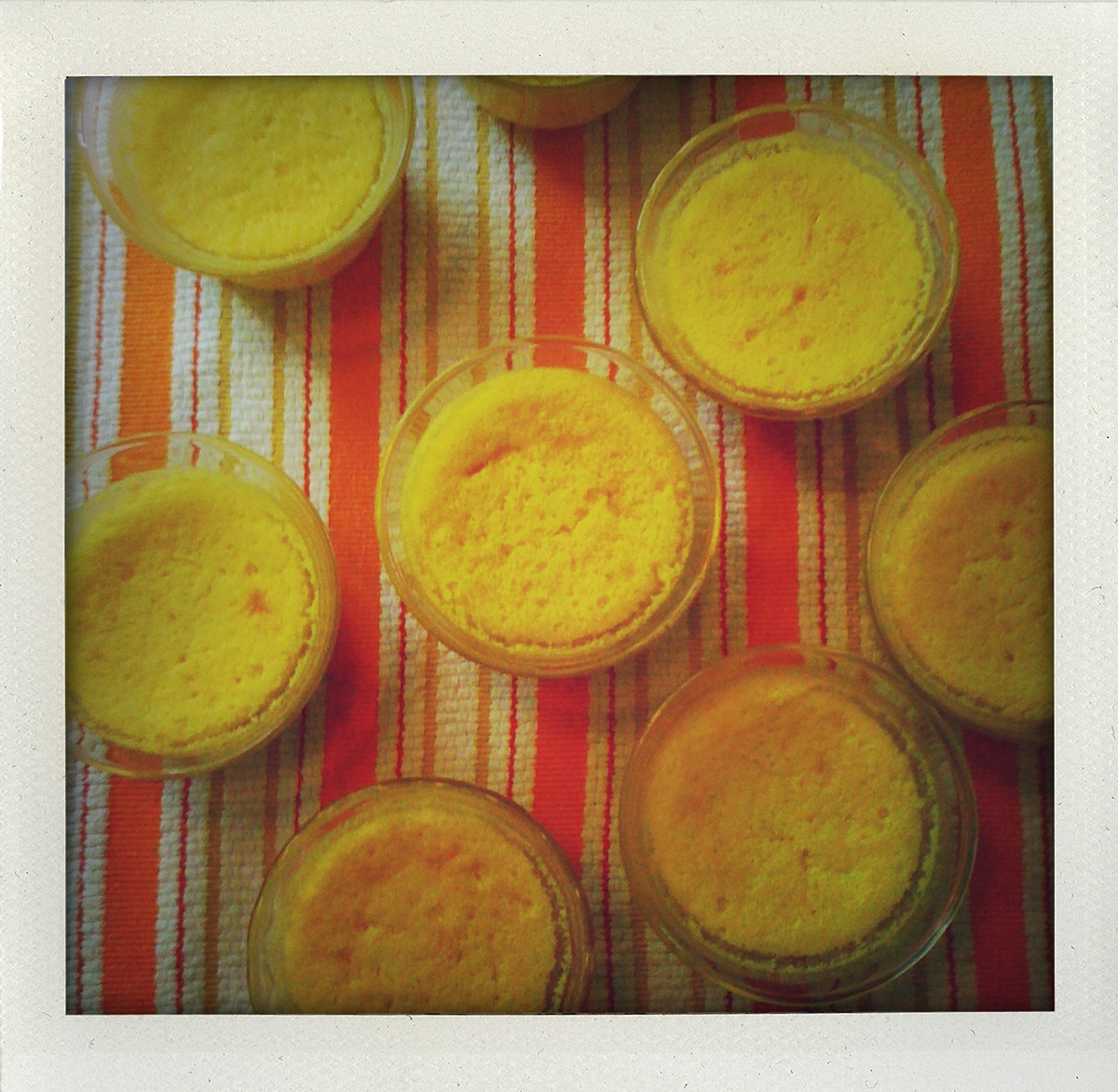
"lemon sponge custard"

Lemon Sponge Custard

Lemon sponge custard is neither cake nor custard, but some happy amalgamation of both. There are recipes for sponge puddings or sponge custards dating back to the 1800s. The scientific explanation for what happens when you add a large amount of milk to eggs, sugar and flour is that the batter separates as it bakes creating a custard layer on the bottom and a sponge cake on the top. Similar to many custards, you bake this recipe in a bain marie which is simply a French term meaning you cook the food in one vessel by placing it in another vessel containing hot water. The technique was supposedly named after Mary the sister of Moses, who is said to have written a book of alchemical recipes many thousands of years ago. Whether you know the science of this recipe or not the results are the same. You start out with one batter and end up with two different desserts in one, a type of presto-change-o abracadabra cooking magic which happens as it bakes.

Personally I love to cook lemon sponge custard in individual glass custard cups so you can see the different layers, but any custard cup will work. Over the years I’ve collected many custard cups since they are ideal not only for lemon sponge custard, but also as olive pit spittoons and as micro hot fudge sundaes bowls.

"custard cups"

Custard cup collection

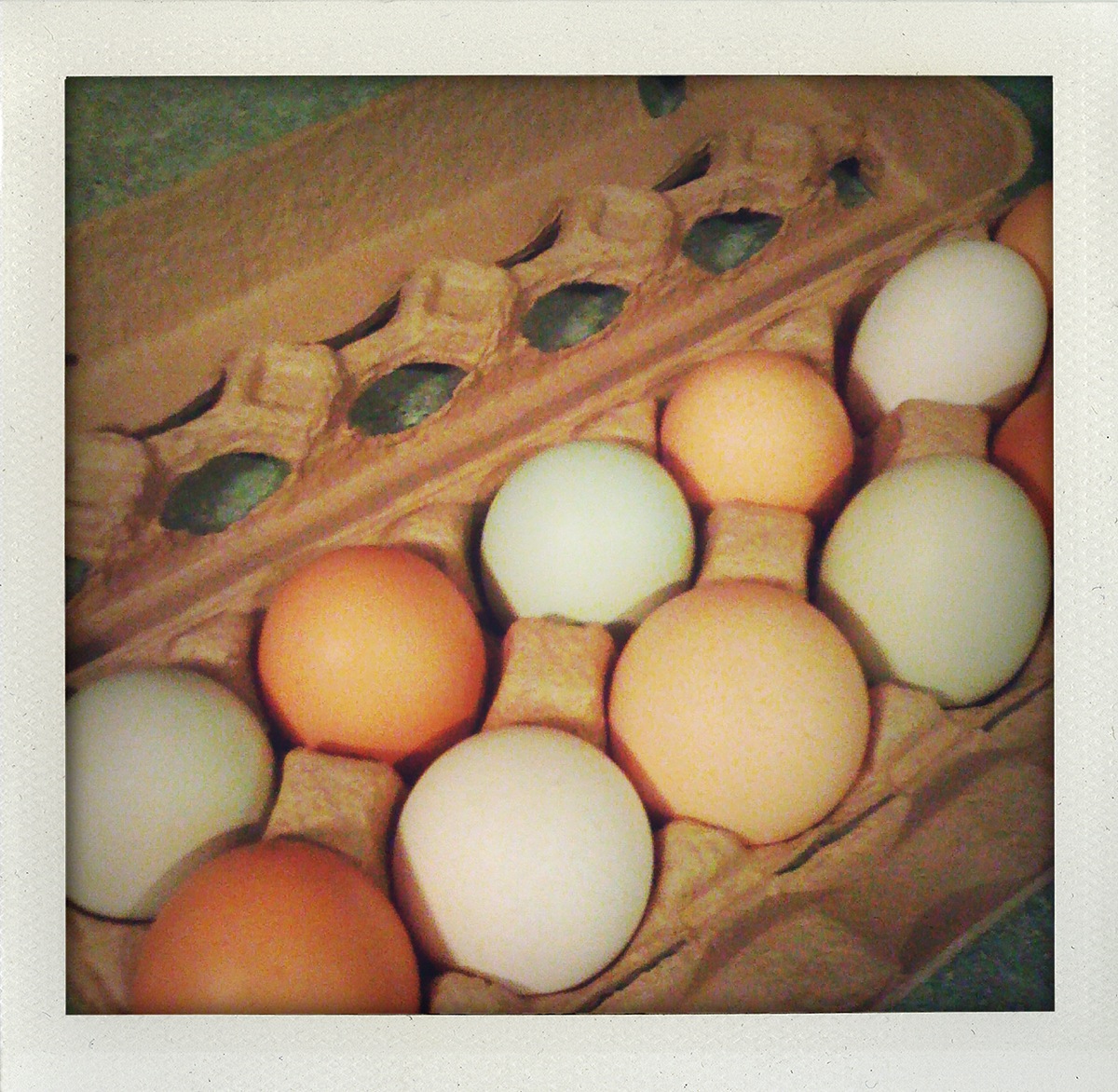
I prefer my lemon desserts tart so I’ve boosted the amount of lemon juice and zest called for. I also love making this with local eggs from the farmer’s market which always seem to be a more intense yellow than the ones from the supermarket. They don’t seem to change the taste–it’s a visual thing.

"farmer's market eggs"

Eggs from the farmer's market

Lemon Sponge Custard

3 eggs, seperated

pinch of salt

2 Tablespoons of unsalted butter, softened

3/4 cup sugar

grated zest of 2 large lemons**

5-7 Tablespoons lemon juice

4 tablespoons flour

1 1/2 cups milk

Put a large kettle on to boil,  preheat oven to 350ºF, and set six custard cups in a 9″ x 13″ pan. Beat the egg whites with salt until stiff peaks form. In another bowl cream sugar and butter together, then add the egg yolks and beat some more. Sprinkle in the flour, lemon zest and lemon juice, mixing until everything is combined. Pour in milk and gently whisk together. Fold in egg whites, stirring until nearly all streaks of white are gone. Pour batter into custard cups and set pan on edge of oven rack. Carefully holding onto the pan pour boiling water around the custard cups. You want at least 3/4″ of water. If you have enough water in your kettle you may pour it as high as half way up the sides of the custard cups. Gently slide the pan fully onto the shelf and bake for 38-45 minutes or until the tops are lightly browned. Be careful removing the ban marie pan from the oven. You don’t want to slop any of the hot water into the sponge custards. Likewise be careful removing the custard cups onto a dish towel or cooling rack as the cups are quite hot. Let cool at least 30 minutes. You may serve these either slightly warm or when they are all the way cooled you may put them in the fridge and serve cold. Delicious either way.

"whipped egg whites"

Stiffly whipped egg whites

"creaming egg yolks into butter and sugar"

Beating in egg yolks

"combining ingredients"

Folding in egg whites

"lemon sponge custard getting ready to bake"

Ready to bake

"lemon sponge custard cooling"

Cooling lemon sponge custards

* If you want to read about the science of cooking I recommend Shirley Corriher’s books. She’s a biochemist with an astonishing wealth of knowledge about the why’s and why nots of cooking. Harold McGee is another great writer about the science of cooking.

**For decades I’ve used a microplane from Lee Valley Tools. They were one of the first companies to realize a secondary use for an existing tool. There are other companies who make micro planes, including ones with handles. I use my micoplane for three things. Zesting citrus, turning a chunk of Parmigiano Reggiano into a cloud of grated cheese, and for when I want a very fine dusting of chocolate for crêpes or to decorate a cake with.

3 Comments

Filed under 50 Recipes

Hurricane Irene Baking

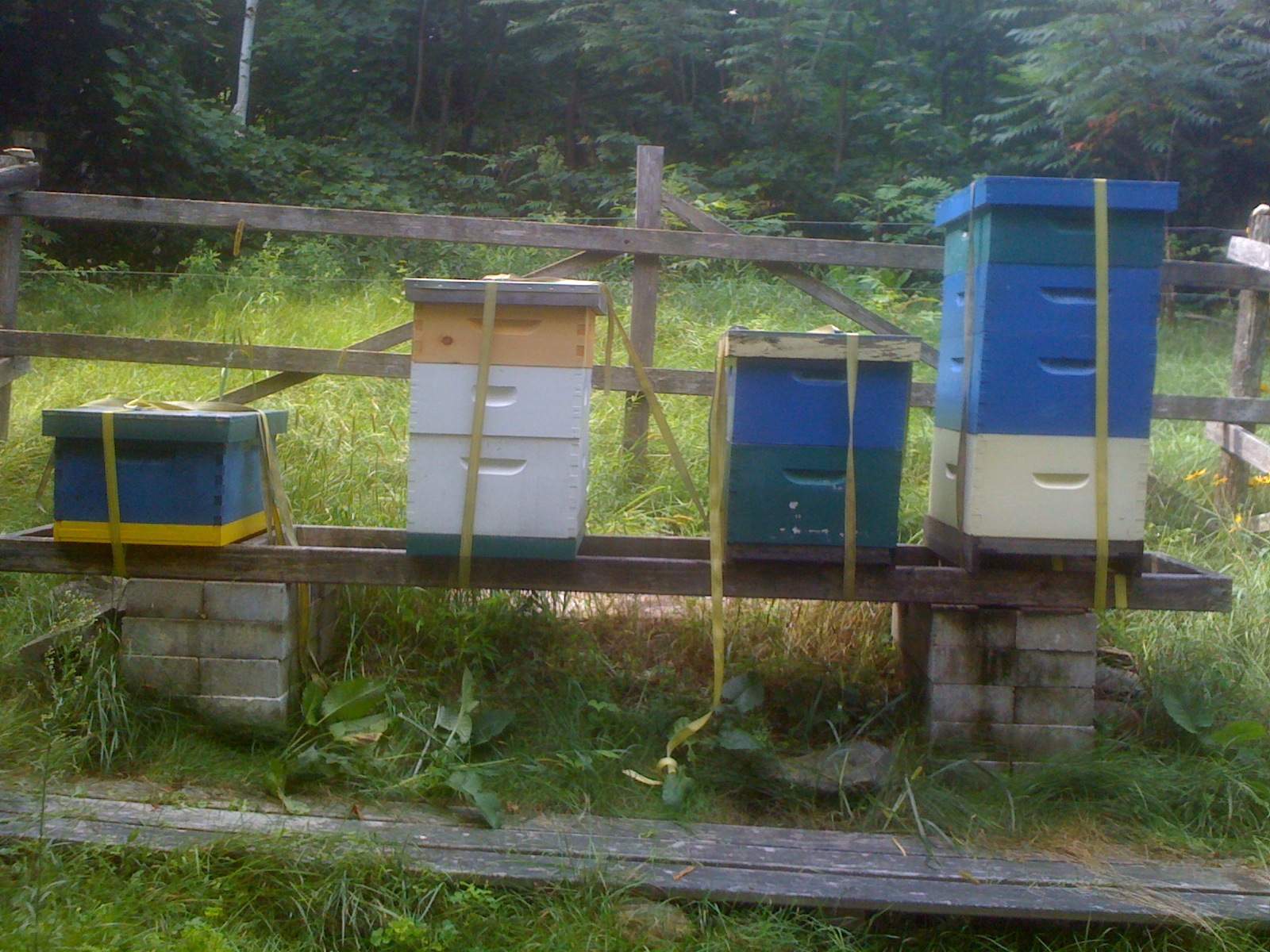
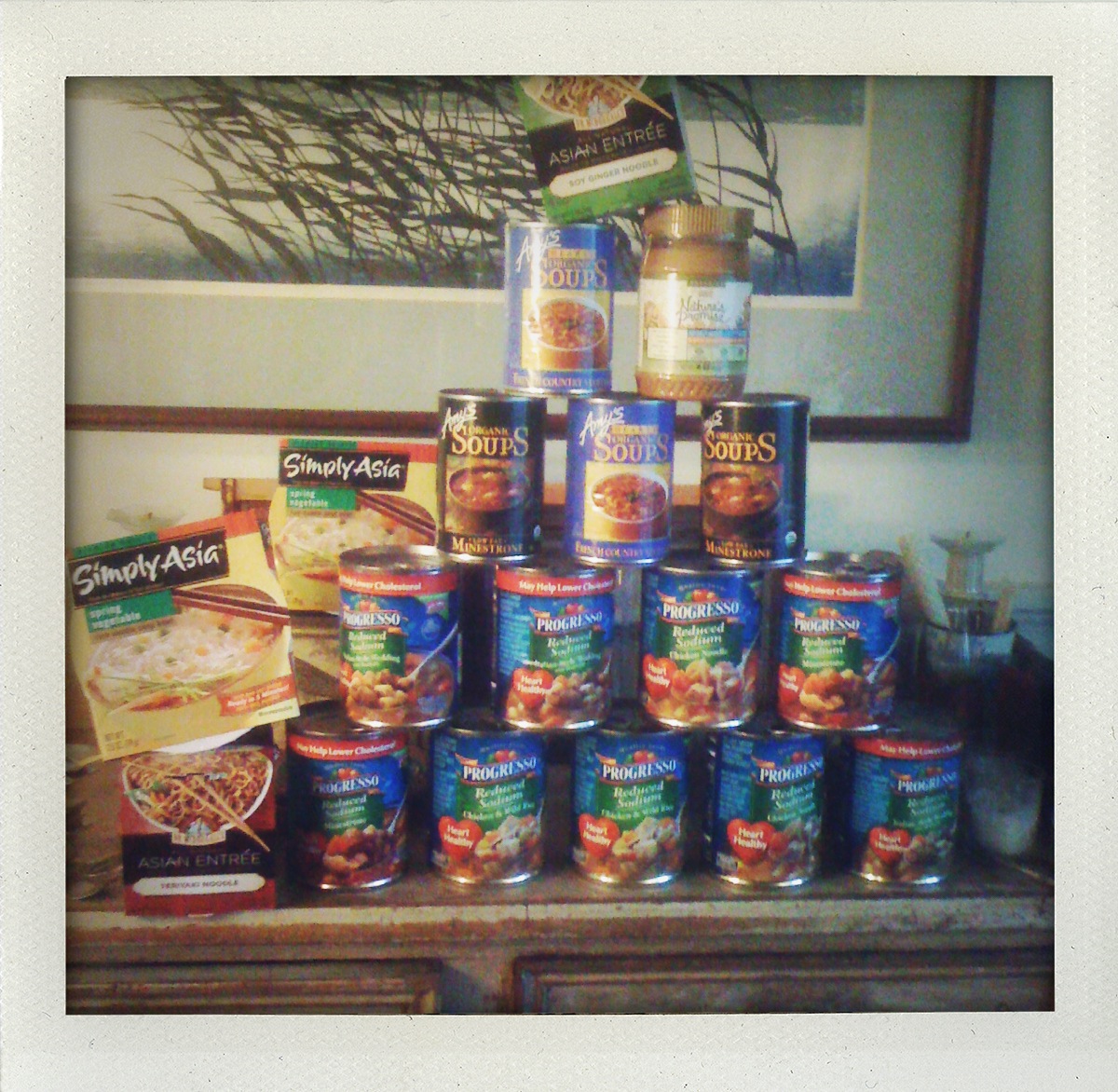
Saturday morning I strapped down my bee hives. We cleared the deck of all chairs, tables, and plants. The kids helped take down the screen tent and put the kayaks under the playhouse. Fifty-five gallons of water are stored in every conceivable container are scattered around the house. The emergency candle box has been found and brought up from the basement. I bought a pyramid of canned soup from the store, as well as essentials like tonic (wouldn’t want to run out of G & Ts during the storm). Then we picked up twenty-seven hours worth of videos from our local library. We were as prepared as we could get for Hurricane Irene.

"Beehives strapped down"

Beehives strapped down for the hurricane

"Pyramid of soup cans"

Pyramid of soup

"water for irene"

Vessels of water

"water jugs downstairs"

Water jugs downstairs

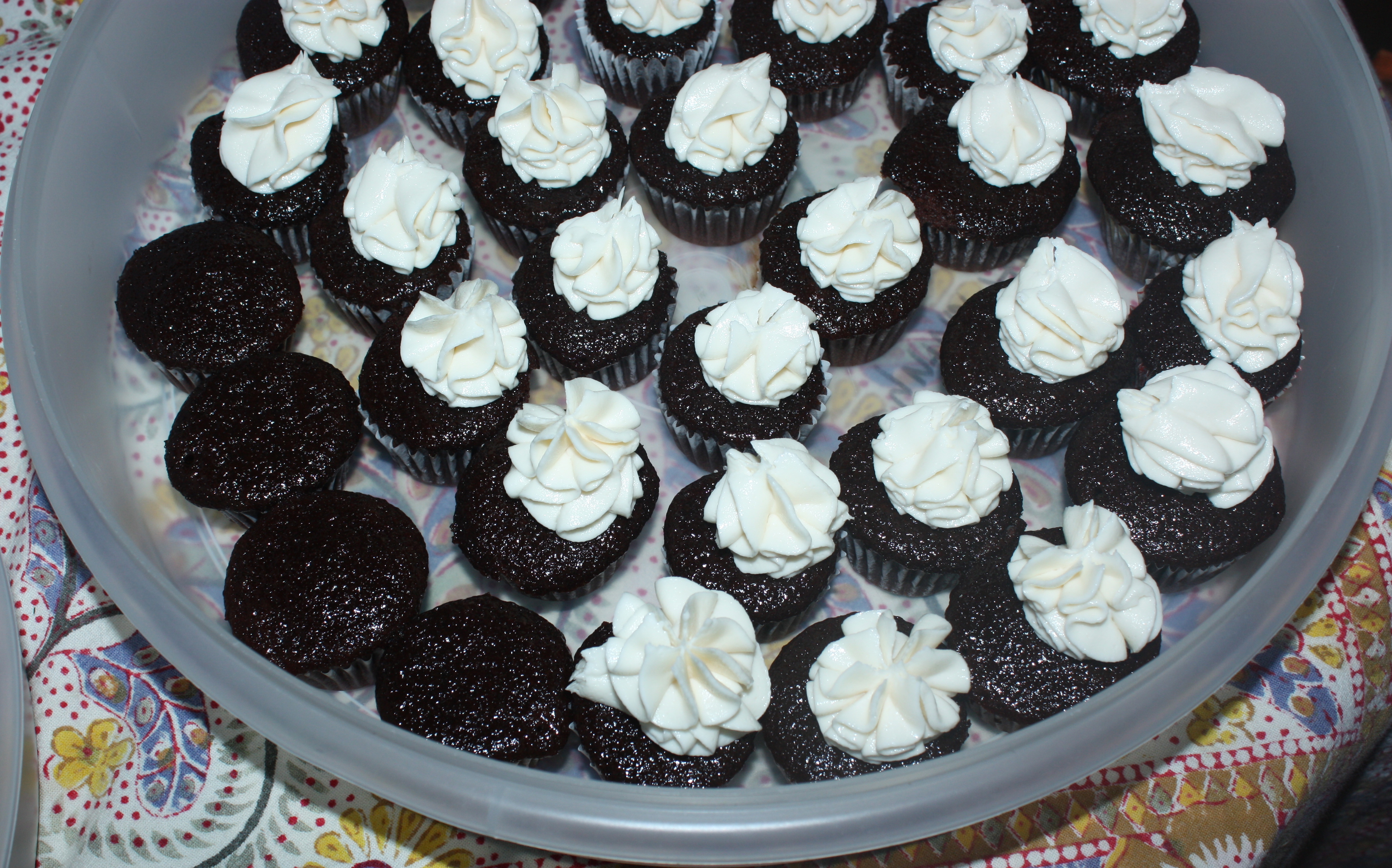
Then, for some reason before the storm hit I felt compelled to bake. We still had power, and the fridge did need emptying for the upcoming storm since we so often lose electricity during bad weather. I quickly whipped up a batch of chocolate cupcakes from the best chocolate cake recipe. It was the perfect base to test my cream cheese frosting recipe on. Isabelle’s friend Charline who is visiting from France had tasted it on the miniature chocolate cupcakes I’d made for her birthday the week before and wanted the recipe (along with some of you). Since I don’t usually work from a recipe when I make cream cheese frosting (I taste as I go) I’d promised to whip up a batch and measure everything so Charline could make it when she returned to France.

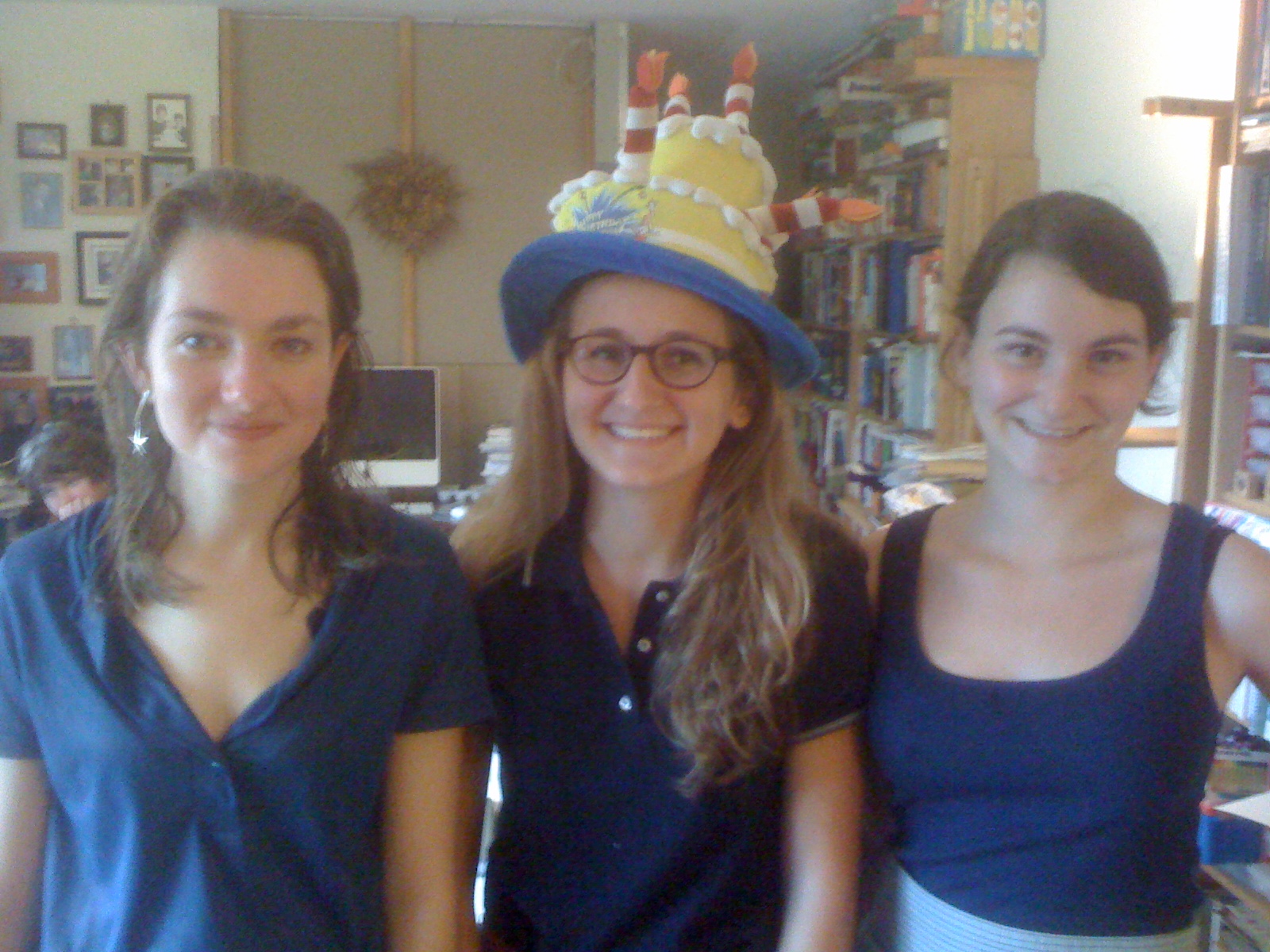
"Charline's birthday"

Strawberries, madeleines, chocolate cupcakes, and the birthday hat

"Charline's 16th birthday"

The birthday girl and friends

"chocolate cupcakes with cream cheese frosting and raspberries"

Charline's birthday cupcakes

As the rain poured down pre-Irene we watched videos, ate soup, and Charline deftly wielded a pastry bag. We didn’t have any raspberries that night so sprinkles showered over the cupcakes much as the rain was pounding down outside.

"charline with a pastry bag"

Frosting seven dozen cupcakes

"cupcakes being frosted"

"sprinkles raining down on cupcakes"

Raining sprinkles

Here is the frosting recipe in english and french. Merci Charline for helping with the translation and letting me play with your camera!

Cream Cheese Frosting

I pull the butter and cream cheese out to soften before I start to bake. In the time it takes to mix and cook the batter the butter and cream cheese are usually the perfect temperature. If they are still too cool to cream together because it’s really cold in your house or you forgot to pull them out in advance simply cut them into little pieces and place them in a bowl near a warm spot in your kitchen. You don’t want them to melt, just be soft enough to incorporate with one another.

1 1/2 sticks unsalted butter, softened, 6 ounces

6 ounces cream cheese, softened

1  1/2 pounds powdered sugar

3-5 teaspoons vanilla extract

In a large bowl cream together butter and cream cheese. Add about half the powdered sugar and beat until smooth. Add three teaspoons of vanilla and beat in most of remaining powdered sugar. Add rest of vanilla if desired. The consistency should be spreadable – not too loose and not too stiff. The amounts will shift slightly depending on the weather outside, which is why I don’t have you adding all the powdered sugar at once.

For cupcakes I put the frosting in a pastry bag with a star tip. You could also use a plastic bag and cut off a small bit of one corner. Or you could use a small knife. Freeze any leftover frosting. I find this amount of frosting good for one double layer cake with some decorative work. You won’t need it all for cupcakes unless you like a mound of frosting as big as the cupcakes themselves.

Note: I originally posted this recipe for cream cheese frosting with a 2:1 butter to cream cheese ratio. A friend made it and thought it wasn’t “cream-cheesey enough”. I’ve changed it to a 1:1 ratio, though you could invert it so it is a 1:2 butter to cream cheese ratio too. The more cream cheese you add, the softer the frosting becomes. You can compensate for the softness by adding more powdered sugar, but that makes it sweeter. 

Glaçage à la crème de fromage

Je tire le beurre et le fromage à la crème pour les adoucir avant de commencer à cuire. Pendant le temps qu’il faut pour mélanger et faire cuire la pâte le beurre et le fromage à la crème sont généralement a la température parfaite. Si ils sont encore trop frais pour mixer, car il fait vraiment froid dans votre maison ou vous avez oublié de les sortir à l’avance tout simplement les couper en petits morceaux et les placer dans un bol près d’un endroit au chaud dans votre cuisine. Vous ne voulez pas qu’ils fondent, juste être suffisamment souple pour intégrer les uns avec les autres.

170 gr. de beurre non salé, ramolli

170 gr. de fromage à la crème, ramolli

700 gr. de sucre en poudre

3-5 cuillères à café d’extrait de vanille

Dans un grand bol je mixe le beurre et le fromage à la crème. Ajouter environ la moitié du sucre en poudre et battre jusqu’à consistance lisse. Ajoutez trois cuillères à café de vanille et battre la plupart du sucre en poudre. Ajouter le reste de la vanille, si désiré. La consistance doit être tartinable – pas trop lâche et pas trop raide. Les volumes se déplaceront légèrement en fonction du temps qu’il fait dehors, c’est pourquoi je ne vous ai pas fait ajouter le sucre en poudre tout à la fois.

Pour les cupcakes j’ai mis le glaçage dans une poche à douille avec un embout étoile. Vous pouvez également utiliser un sac en plastique et couper un petit morceau de l’un des coins. Ou vous pourriez utiliser un petit couteau. Congelez les restes toute glaçage. Je trouve cette quantité de glaçage bonne pour un gâteau à double couche avec quelques travaux de décoration. Vous n’aurez pas besoin de tout pour les cupcakes sauf si vous aimez un monticule de glaçage aussi gros que les petits gâteaux eux-mêmes.

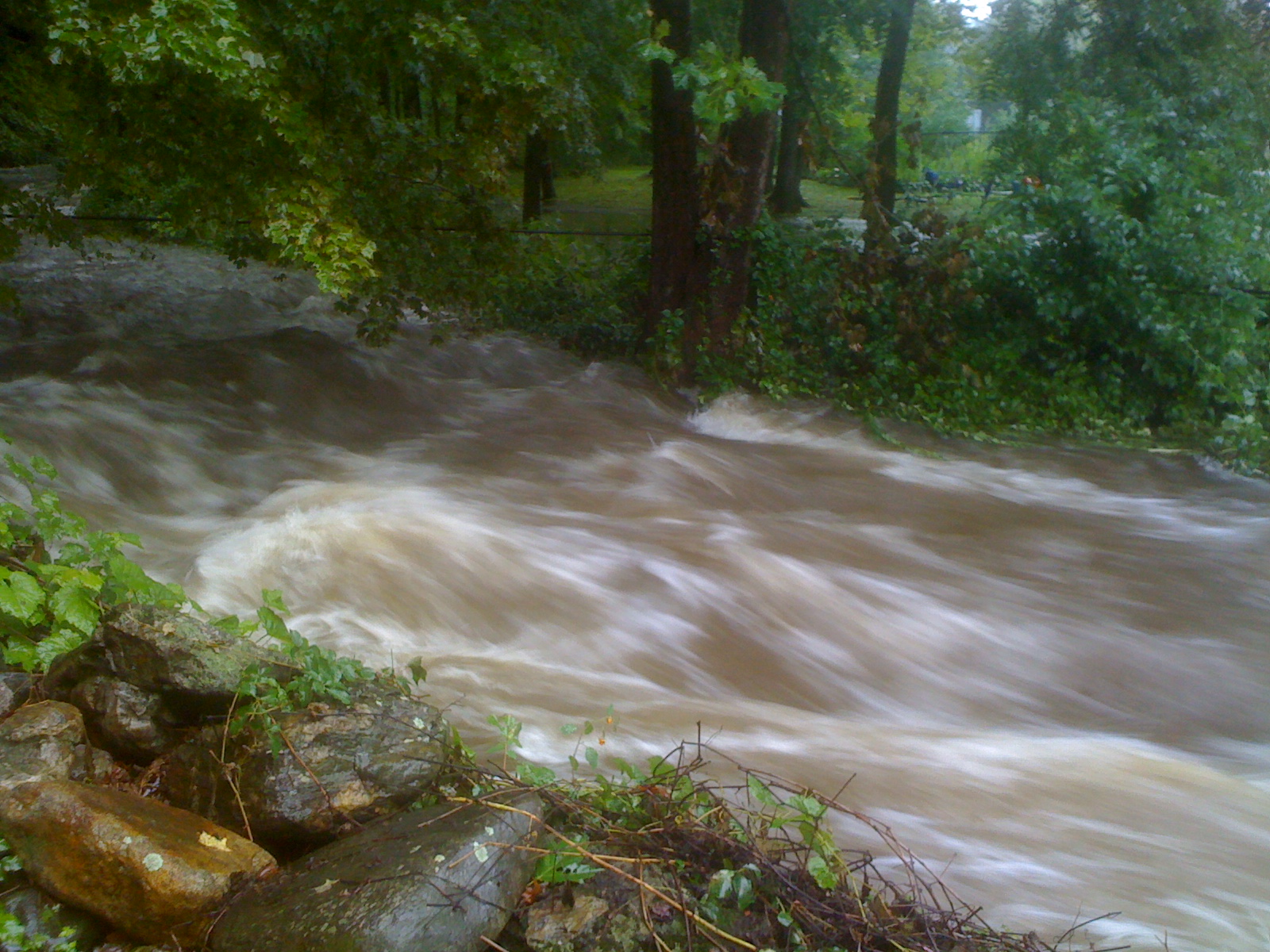
"westbrook river raging"

The Westbrook River raging after Irene passed through

5 Comments

Filed under 50 Recipes

Muffin Meltdown

I got up at 6am yesterday to make muffins for the kid’s last day of camp. It was 80ºF before I even turned the oven on to preheat so you might ask if I was suffering from heat stroke (I wasn’t) or if I’d simply lost my mind (not that I know of). What would have inspired me to make muffins in the middle of an excruciating heat wave in an un-air conditioned house? Because my kids had asked me to.

It’s my achilles heel being asked by someone I love to cook for them. I can say no to people I’m not related to, though I often say yes. I can even be quite snappish with my own two offspring when they tell me they need something baked in a mere two hours (but Mom  I forgot to tell you I needed them…..). This time Russell asked on Monday–four days in advance, and he said please. Once Isabelle heard I was baking magnificent muffins for him she asked for some too. So of course I agreed. Which is why I was turning the oven on the day the thermometer promised to top 100ºF.*

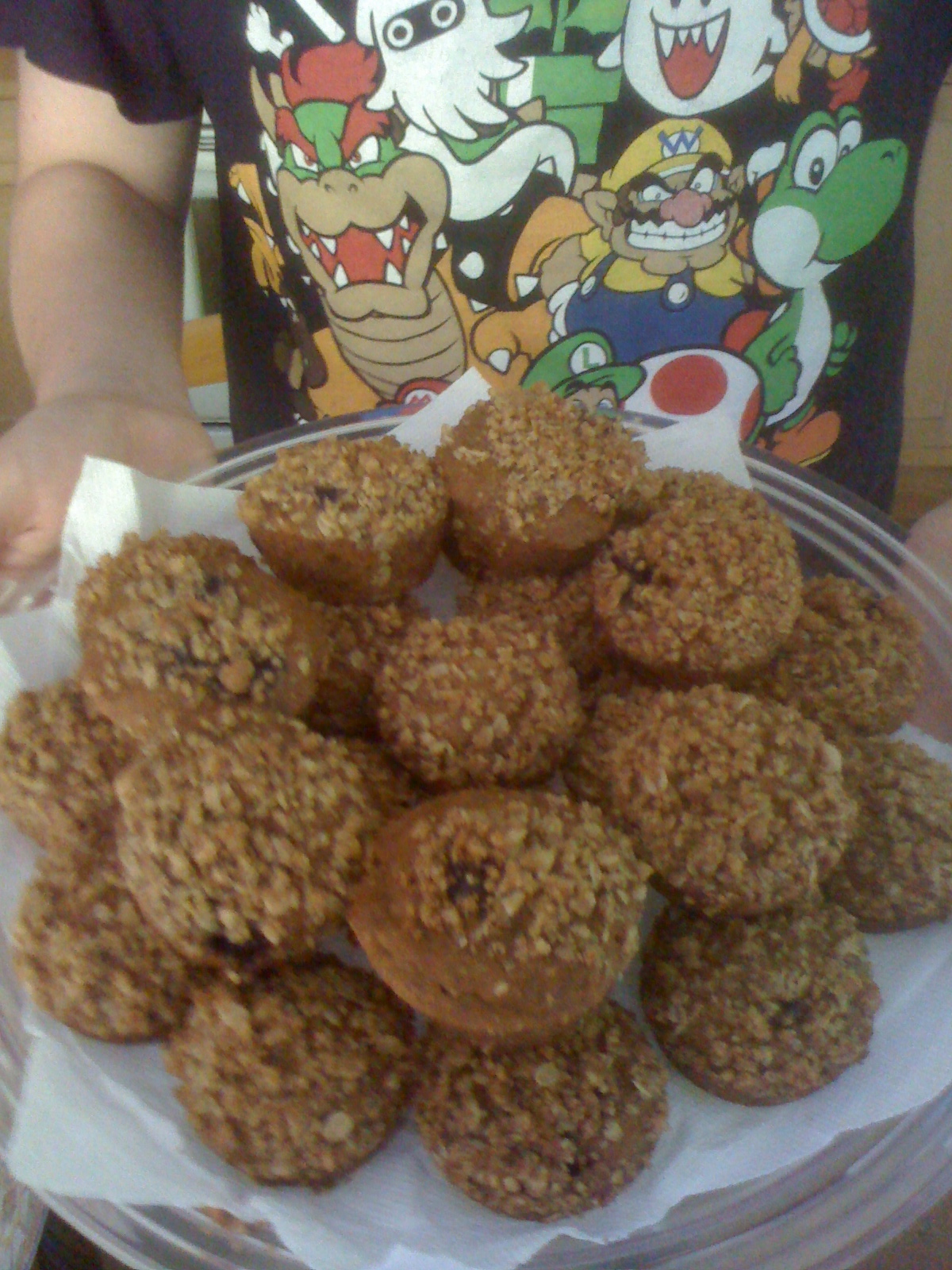
"Russell holding magnificent muffins"

Ready for the last day of camp

I like muffins. They’re a happy, all-American breakfast food that you can hold in your hand. These muffins are particularly delicious, hence their name – magnificent muffins. Moist with pumpkin, zippy with blueberries with a nice messy streusel topping make them hard to resist. This recipe is adapted from Ken Haedrich’s book Feeding the Vegetarian Family. Besides the great taste this is a vegan recipe, which means it will work for folks who are allergic to dairy (if you’re baking for people with tree nut allergies you’re out of luck). I’ve come to believe that while I don’t personally want to be a vegan, it’s always a good idea to have a few vegan recipes in your recipe box, especially if you live here in the happy valley. The final selling point I have for these muffins is that you can make your wet and dry mixes the night before. Store the wet in the fridge and the dry and streusel mix on the counter, have your muffin pans ready so by the time the oven has preheated you’ll be ready to slide them in to bake.

Magnificent Meltdown Muffins

I use frozen blueberries in the winter and fresh in the summer. One can of pumpkin will make two recipes.

1 cup canned pumpkin

1 cup orange juice

½ cup maple syrup

½ cup vegetable oil

2 cups whole wheat pastry flour

1 cup whole wheat flour (sometimes I use white)

1 cup walnuts chopped super fine (measure first then chop)

1 ½ teaspoon baking soda

1/2  teaspoon salt

1 ½ teaspoons cinnamon

¼ teaspoon nutmeg

¼ teaspoon allspice

1 cup blueberries (fresh or frozen)

Streusel (see recipe below)

Preheat the oven to 350ºF. Oil or grease 24 muffin cups then dust with flour or extra streusel topping or wheat germ. Whisk together pumpkin, oj, maple syrup, and oil. In a separate bowl stir dry ingredients together. If using frozen blueberries plop them into the flour mix to keep them from smearing too much when you combine the wet and dry mixes. Gently mix together pumpkin  mix with flour mix and if using fresh blueberries add them in near the end. Spoon batter into muffin cups and sprinkle with streusel mix. Bake 35 minutes, cool in pan for 10 minutes then finish cooling on wire rack.

Streusel Mix

This topping is so good that I usually make a triple batch and store it in the freezer. It’s good for simple fruit crumbles, on top of plain yogurt, or as the topping for magnificent muffins.

1 1/2 cups walnuts

1/3 cup brown sugar

1/4 cup oatmeal

1 teaspoon cinnamon

2-3 Tablespoons vegetable oil

Pulse walnuts in a food processor until fairly fine, then add rest of ingredients and pulse to combine. You don’t want the mixture to be too oily or too dry so pinch a bit between your fingers to test as you’re adding the oil.

*Weather Update: After camp we went into Northampton to grab a few things at the store. When we got back into the car (which was parked in the shade) the thermometer read 106º. After we rolled down the windows and drove for a bit it climbed to 108º! As we wound our way back to Whately we watched it drop – to a cool 87º! 

"106º"

8 Comments

Filed under 50 Recipes

Pot Luck Perfect

Beware what you bring as a pot luck offering since it may earn you a reputation for that dish and ever after you will be forced to bring that same dish to every pot luck you attend as your reputation will proceed you. I know because it happened to me. Not that I mind, I chose well and my “signature dish” is not bound by the seasons or weather. Ask anyone who goes to my church or my kid’s school or at my bee group. They may not know my name, but they will know that I’m the lady who brings the sesame noodles. Is that all I’m known for–no there’s also a cupcake reputation I carry around, but sesame noodles are my savory dish moniker.

Why sesame noodles?

  1. They’re made from ingredients I have in the house most of the time.
  2. They can be made in the time it takes to boil a pot of water + 10 minutes.
  3. They work for most diets including vegans.
  4. They don’t rely on an ingredient that is ever out of season.
  5. Best of all they’re cheap.

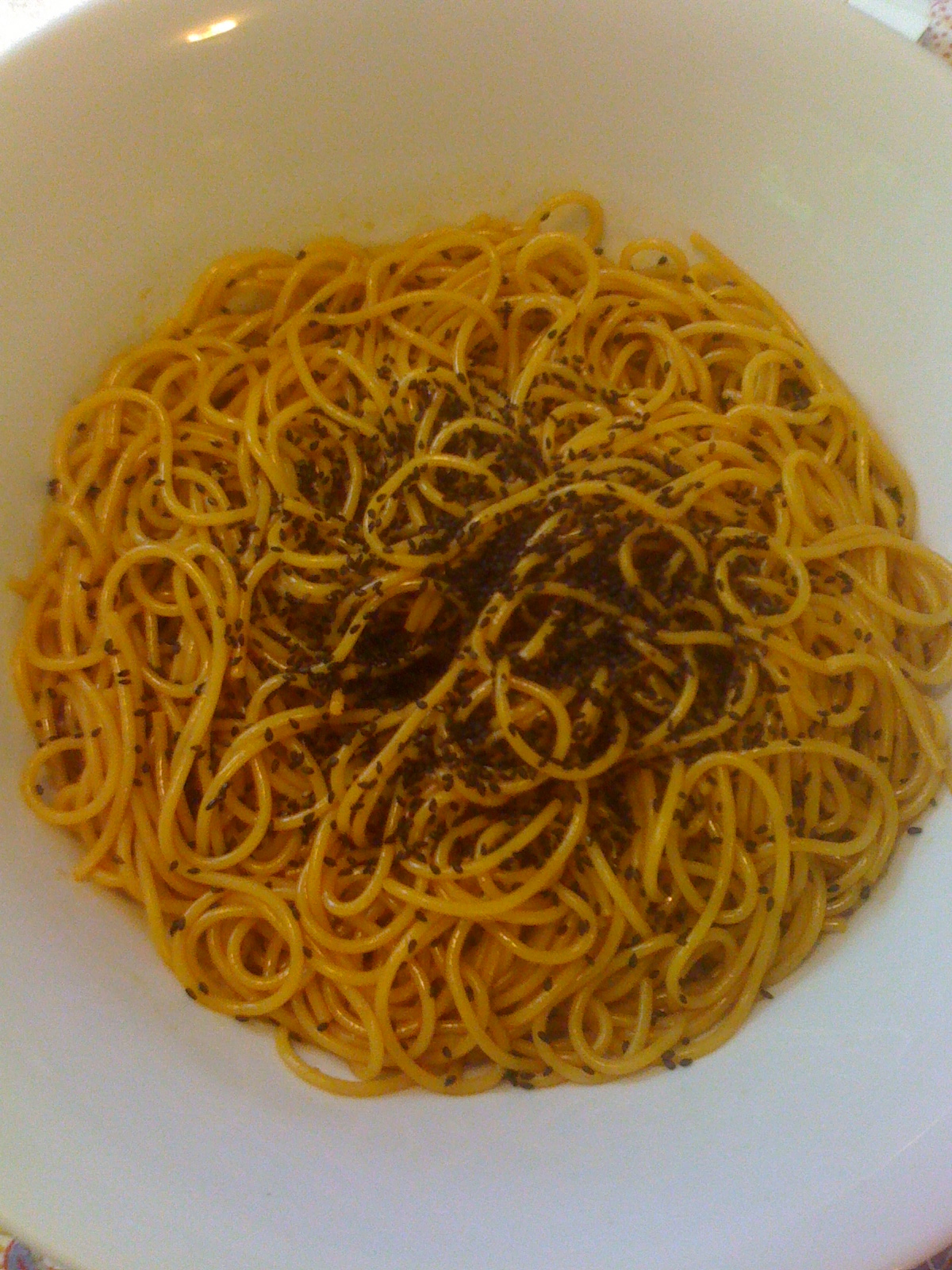
They weren’t inexpensive when I first discovered them in the deli case of my local Whole Foods over a decade ago, but that is what caused me to try to recreate them at home. I love to scan the deli case while I’m shopping for delicious tidbits of food that I might not make at home; just a taste of luxury or better yet a recipe inspiration which sends me scurrying back to the isles for a few more items to throw into my cart. One day I spied a giant platter of glossy brown noodles sprinkled with black sesame seeds. Isabelle, Russell and I shared a small bowl and quickly decided we wanted more. The problem was I balked at buying a large quantity of the nutty brown noodles given their $7.99/pound price tag. Until I looked at the ingredient list they posted for people with allergies (or sneaky cooks like me). Spaghetti, Tamari, Toasted Sesame Oil, Black Sesame Seeds. That’s it. I probably don’t even need to give you a recipe now because now you know how to make them. So simple, so quick, and so cheap. My sesame noodle come in at under $2.00/pound, depending on where you buy your ingredients, which means you can show up at a pot luck with two pounds for less than five bucks. Noodles worthy of a pot luck reputation.

"sesame noodles"

Pot Luck Perfection

Sesame Noodles

1 pound spaghetti (white or brown, though I usually use white)

Tamari or low sodium soy sauce

toasted sesame oil

black sesame seeds

Bring a large pot of unsalted water to a boil and cook the pasta until al dente. Drain and give a quick rinse in cold water, but don’t completely cool off the pasta–you want a little bit of warmth to help suck up the sauce. Mix the tamari and toasted sesame oil in a 3:1 ratio. Depending on taste you’ll need 1/2 cup or more total sauce to give the noodles their flavor. Taste as you go and toss frequently so all the noodles are well coated. You don’t want them sitting in a puddle of sauce so it’s better to start slow and work your way up till it tastes good and you seem to have reached the noodle saturation point. Note this recipe requires repeated taste tests, in our house it often requires the entire family to taste test. To finish sprinkle with black sesame seeds, I go until they look good, somewhere between 2-4 Tablespoons and a little extra for the top. Serve at room temperature, though if you make it the day before throw it in the fridge until you leave for your pot luck. You may want to bring some tongs with you as the noodles can prove elusive if you try to serve them with a fork (though they can be eaten with a fork, a dichotomy I haven’t quite figured out).

6 Comments

Filed under 50 Recipes