Category Archives: 50 Recipes

Bake a Batch of Thank You Biscotti

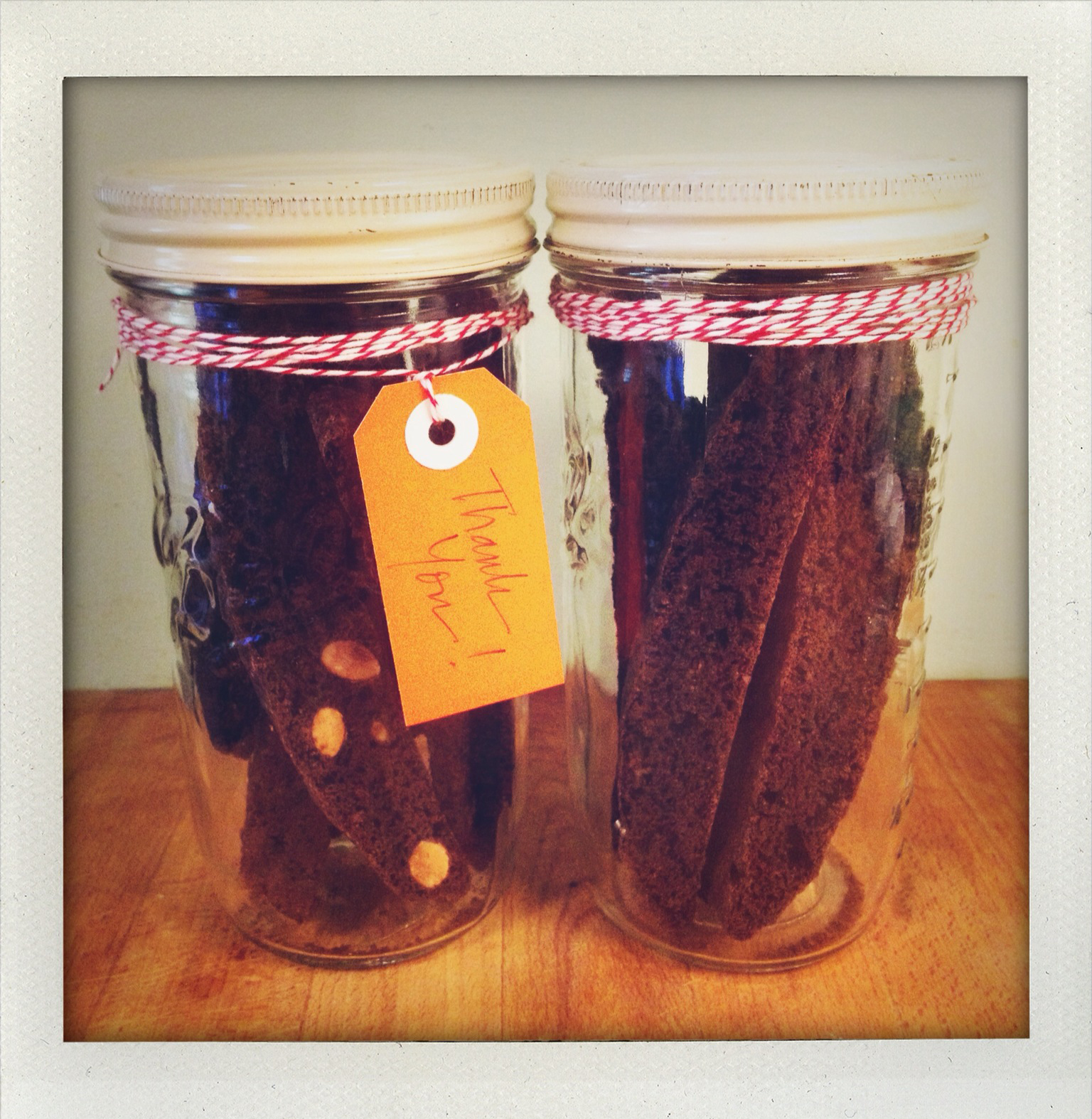
"thank you biscotti"

I love getting presents, but the reality is I have too much stuff. Way too much stuff. Jammed into a very small house. I joked at a party the other night that perhaps I’m part squirrel. This compulsion to hold onto things could stem from the fact that my mother was officially in the stuff business as I grew up. Well, actually she was in the house sale business, but really what she and her partner sold were dead people’s stuffI love stuff. I get paid to have stuff for photo shoots. I guess I have a bit of a problem.

So if I have too many things where does that leave someone who wants to give me something? Up the creek is where it leaves them. What I do need is a good house purge. But how do you wrap that? Or I could try to do what my sister has disciplined herself to do. For every ten things  that come into her house ten things have to go. Not sure I have her self-discipline, and what about all the cool stuff she has to get rid of when I give her a present?
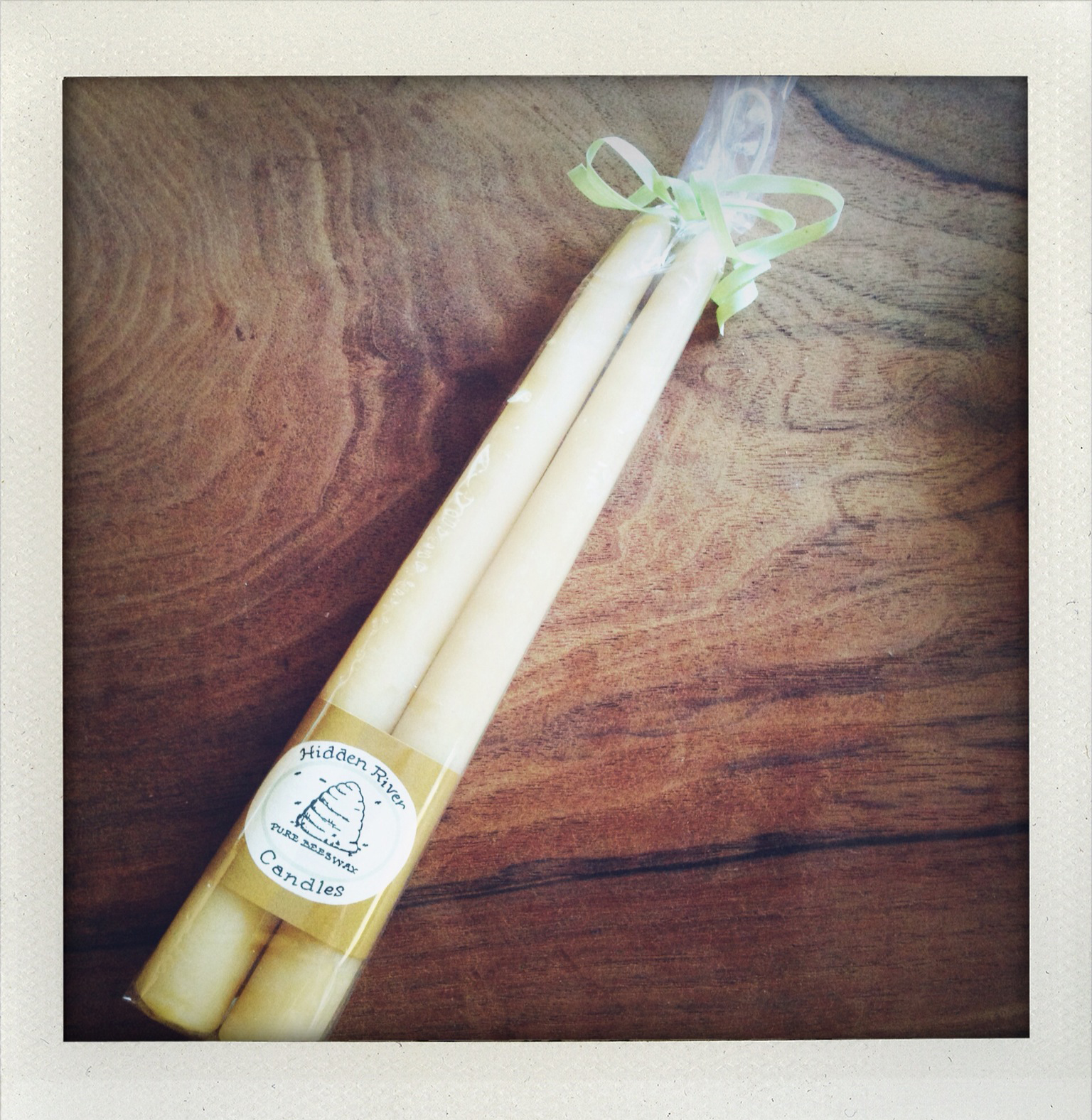
"Phyllis' hand dipped beeswax candles"

If I don’t need more stuff other people probably don’t need more stuff either. Except what do you give someone when a present or gift is called for? Answer: Something that will go away. Here are some examples – my friend Phyllis’ hand dipped beeswax candles, some fabulous soap, a jug of local liquid gold aka maple syrup, a box of Florida honeybells in the middle of winter, or a bunch of chocolate biscotti. It’s so easy. If it burns, washes away or can be eaten it’s a perfect gift.

"slice biscotti"

I love the milk chocolate biscotti from Maida Heatter. The recipe comes from her book Maida Heatter’s Brand-New Book of Great Cookies, which is unfortunately out of print. If you want to buy it so you can have all of the recipes you can get a used copy here.

"rebake biscotti"

I’ve tweaked the recipe (of course). First I always make a double batch of these biscotti, one with nuts and one without. Realize the recipe below is huge, though you don’t have to bake off all the biscotti at once. Also I don’t use blanched almonds, as she recommends. I can’t often find them in the stores around me and I don’t notice a difference. I did make my own skinned almonds once, but it wasn’t worth the effort.

"symphony milk chocolate"

The other thing I like to remind people about is  you have to commit to being around the house for a while when you bake biscotti. Not that you have to hover over the biscotti themselves, but you can’t run out and get the kids from school or hit the gym. Biscotti, which literally means twice baked, require a fair amount of time in the oven. What you can do between switching the pans around is lie on the sofa and read several chapters of a book, answer a few emails, or hang some laundry on the line. Baking biscotti gives you an opportunity to putter. Once you slide a cookie sheet into your oven  you need to stick around for 2+ hours. Just want  you to know since you can’t stop half way through.

Maida’s Milk Chocolate Biscotti

1 1/3 cups almonds

3  4.25 ounce bars Hershey’s Symphony Milk Chocolate, divided into 1  1/2 bars + 1  1/2 bars

3 1/2 cups flour, divided into 1  3/4 cups + 1  3/4 cups

2 teaspoons baking soda, divided into 1 teaspoon + 1 teaspoon

1/4 teaspoon salt, divided into 1/8 teaspoon + 1/8 teaspoon

2/3 cup dutch processed cocoa, divided into 1/3 cup + 1/3 cup

2 cups sugar, divided into 1 cup + 1 cup

8 large eggs, divided into 4 + 4

2  teaspoons vanilla extract, divided into 1 teaspoon + 1 teaspoon

Spread the almonds on a jelly roll pan and toast in a 350º F oven for 12-15 minutes or until you start smelling toasted nuts. Remember to shake the pan every so often so the nuts don’t burn. Remove from the oven and set aside to cool.

Place two large mixing bowls side by side. I find it easier to mix one batch then the other. Measure out the sugar, flour, cocoa, salt and baking soda into each bowl. Get out your food processor and pulse the dry mix with the broken chunks of the chocolate bar until everything is very fine and you don’t see chunks of chocolate anymore. Dump that back into the first bowl and repeat for the second batch. Add the cooled nuts to one bowl. Add 4 eggs and the teaspoon of vanilla to each bowl. I usually start with the no-nuts batch. Mix with a rubber spatula until all the dry ingredients are moistened. This may take a while, but have faith. Once everything is incorporated it is very sticky.

Put two long pieces of plastic wrap on your counter and spread dough into each, forming a long “log”. When the logs are roughly equal grab the short sides of the plastic wrap and bring it together so the log can no longer spread. Each log will then be about 15″ x 3″. Place on a jelly roll pan and pop into the freezer. Repeat with the nut batch. Freeze the logs for 4+ hours. I usually do at least overnight.

Divide the shelves in your oven so one is in the top third and the other is in the bottom third. Preheat oven to 300º F. Put parchment paper on two large cookie sheets and unwrap one nut and one nutless biscotti log onto each sheet on the diagonal. These cookies spread so diagonal is important. I also place them so the seam side from the plastic wrap is down, but I’m not sure that would make a difference. Bake for 30 minutes then switch the sheets top to bottom and give each a 180º turn at the same time. Bake another 30 minutes.
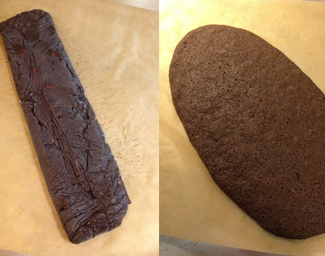
"Biscotti Spread"

Remove cookie sheets and decrease the oven to 275º F. Gently peel the biscotti loaf off the parchment and place on a cutting board. If you have asbestos fingers like me hold the biscotti in one hand and saw off slices with a bread knife into 3/4″ wide biscotti. If you don’t have asbestos fingers use an oven mitt or tea towel. The sawing motion is especially important on the nut loaves since the nuts are a different density than the biscotti. Place biscotti, sliced side down, back on cookie sheet. Repeat for other loaf. Return to oven and bake 20 minutes. Remove, flip biscotti to other cut side, reverse pans top to bottom and give them a 180º. Bake another 20 minutes. Remove and cool on cooling rack. Store in an airtight container so they stay crisp and crunchy. If you’re doing this on a muggy day try to get them into a container as soon as they are cool enough. Otherwise you’ll end up with soggy biscotti, which while edible, are not desirable.

"chocolate biscotti with nuts"

1 Comment

Filed under 50 Recipes

Six Degrees of Separation Sangria

Six degrees of separation means everyone on earth is connected to everyone else by a “chain” of six friends. In the pioneer valley I joke we live in an area of two or three degrees of separation. This sangria is a classic example.

1. My daughter Isabelle went to Montessori with Isabel K., or the other Isabel,  as we call her.

2. Isabel K.’s mom Hilary and I became friends and now are in a knitting group together.

3. Hilary’s step father Bill was a master sangria maker.

4. Hilary’s step father was also a friend of my father. I met Mr. Catherwood several times when I was growing up without knowing anything about his step daughter Hilary or his delicious sangria.

I could have stopped at 3, but I just wanted to show you how wacky and wild things are in this six degree business.

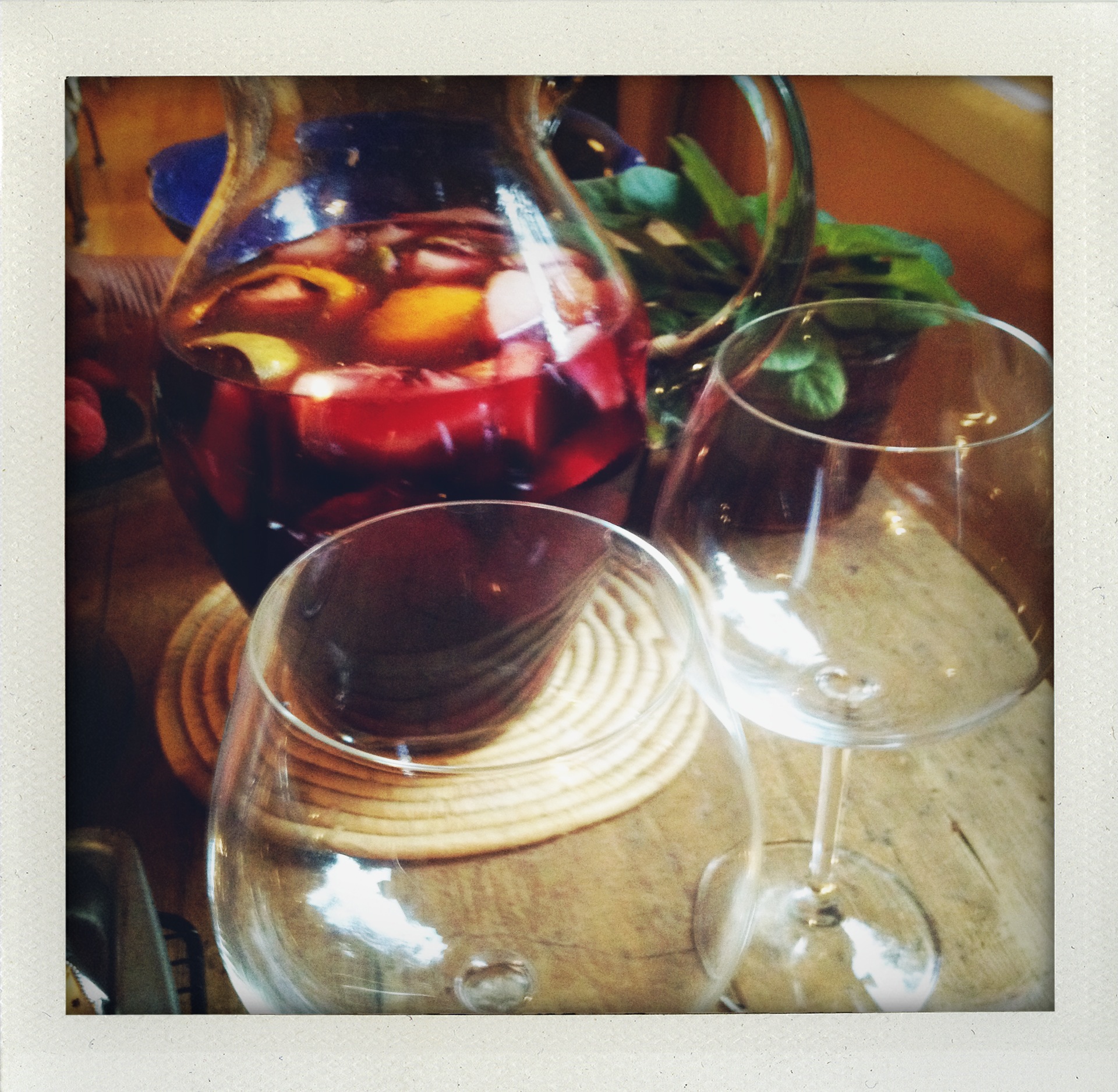
"Bill's sangria"

I have a zerox copy of Bill Catherwood’s recipe in my kitchen drawer, though for most of the summer it resides beneath a magnet on our fridge. It’s so good I really don’t bother with other sangria recipes*, though there are plenty of them out there.

Of course me being me I’ve tweaked a few things. I use various red wines, often the inexpensive ones from Whole Foods or Trader Joe’s. You’re adding so many things to sangria you really don’t need to splurge on expensive wine. If you want to follow Bill’s recipe faithfully he called for Gallo Burgundy. Also I don’t always add the rum called for, mostly because I don’t always have it on hand. Seems great both ways.

Note this makes enough for a big party. You’ll probably need two pitchers, or will end up refilling one pitcher twice. If you want to cut the recipe in half I would simply halve all the ingredients except the fruit, I’d still stick with an orange, lemon, lime, and peach. My final suggestion is do not be tempted to use honey in place of the sugar. Even mild honey. It is yucky and even though you can drink sangria made with it you shouldn’t. Trust me on this, or ask my friend Lisa.

Six Degrees of Separation Sangria

1 gallon red wine

5 ounces rum (optional)

10 ounces club soda

1/2 cup sugar

1 orange

1 lemon

1 lime

1 peach

small amount pineapple juice

Dissolve sugar in large pitcher with club soda. Make long peels of the orange, lemon, and lime and put into the pitcher. Remove the pith (the white part of citrus) and chop fruit. Add the chopped citrus fruit to the pitcher, along with the peeled and chopped peach. Add the wine and rum and a splash or two of pineapple juice. Serve chilled with lots of ice.

I especially enjoy sangria outside on a sultry evening. The clouds this sangria evening were spectacular.

"Sangria drinking sunset"

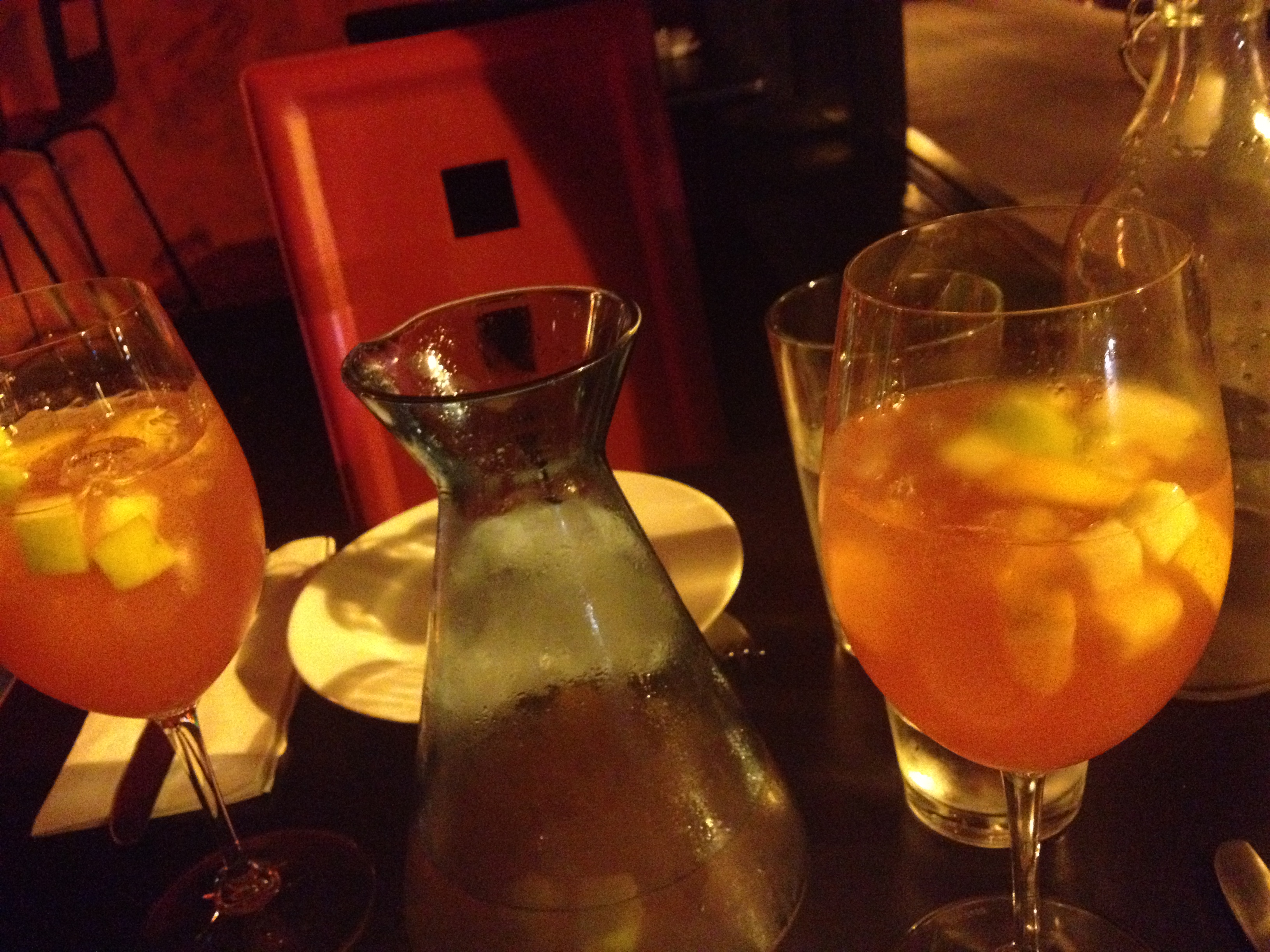
*When Shawn and I recently went to the tapas bar in Northampton we got to choose from a dozen different Sangrias on their menu. It was a lot of fun, and we ended up with a carafe of watermelon sangria.

"watermelon sangria"I am curious to know what your favorite sangria recipe is. Care to share?

2 Comments

Filed under 50 Recipes

Popularity that Lasts-Honey Mustard Chicken

Today would have been Julia Child’s 100th  birthday. I remember sitting on my parent’s couch when I was about twelve watching an episode of The French Chef while Julia prepared chicken kiev. I was mesmerized. Then I had to replicate the recipe, I just had to. So I  boned out and pounded several chicken breasts, prepared a compound of herb butter, trussed up the chicken with its flavored butter tucked inside, crumb coated the chicken “packages”, fried till golden, and baked them so they were cooked through. The only thing Julia forgot to mention was that melted butter could squirt quite far when you sliced into your portion of chicken kiev. A butter stained shirt was a small price to pay for the thrill of being able to copy one of her recipes. Once was enough though and I haven’t made chicken kiev since then. There is however another chicken dish I have made dozens of times, which has never squirted at me, not once. Honey Mustard Chicken.

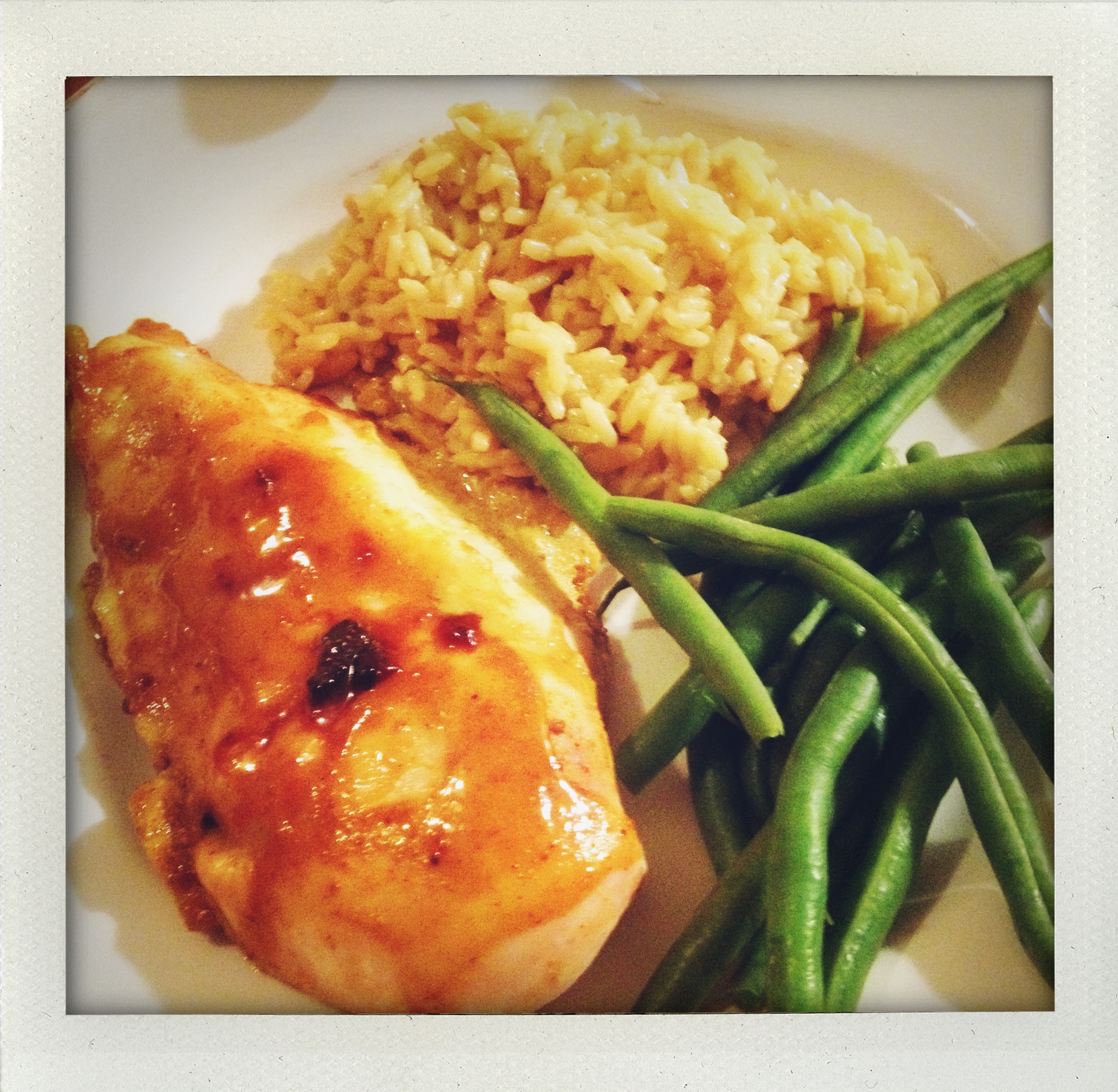
"honey mustard chicken"

When I wrote Two Girls in Brooklyn my friend Marisa reminded me of one of our staple suppers – Honey Mustard Chicken. It was and is a dish we made over and over again. Never going out of culinary fashion, even if it is nowhere near as fashionable today as it was when we first started making it. Grainy Mustard? Curry Powder? Both were exotic kitchen items back in the early 80s. I have not idea where the original recipe idea came from. Julia has a spicy mustard chicken in her book The Way to Cook but I think the original inspiration came from elsewhere. It actually doesn’t matter where it came from, just that Marisa and I make it to this day.

"honey mustard curry mix"

Last month my daughter and I were in Boston for WordCamp (a weekend of geeking out over WordPress stuff) and decided to stay an extra day to visit colleges. Since we were staying a day more than planned we needed a place to stay. Our friend Laura B. offered her guest rooms. Delighted at not having to figure out hotel arrangements I offered to cook dinner. Something for a small gathering which wasn’t a recipe I’d already blogged about, but was a dish I could remember off the top of my head. Honey Mustard Chicken, Carrot Râpées Salad, Bill’s Sangria* and Laura’s Mixed Fruit Crumble with Ginger and Almonds. I’ll give you the sangria and carrot râpées recipes soon. In the mean time here is a recipe you should add to your recipe box NOW. Julia and I say so.

"Honey mustard chicken with green beans, carrot rappes salad and rice pilaf"

Honey Mustard Chicken

Chicken Breasts, bone-in or boneless & skinless, it doesn’t matter

1/3 cup honey

3 Tablespoons dijon mustard (grainy is great, but regular is delicious too)

2 Tablespoons curry powder.

Mix up the honey-mustard-curry. Slather half the mixture over the chicken breasts and cook at 400º F for 20-35 minutes depending on if the bone is in or out. Spoon the other half over the chicken and cook until the coating starts to caramelize and the chicken is done (another 15-30 minutes). Make sure to spoon the honey mustard glaze over the chicken when you serve it.

"Laura B's garden"*I did text my friend Hilary for her step-father’s Sangria recipe. Fortunately she was able to send me a list of ingredients, which I’ll try to post later this week. It’s posted and you can get the recipe here.

"Bill's sangria recipe"

3 Comments

Filed under 50 Recipes

Friday is Pie Day

I have to be honest here I have been out of control lately. My kids are asking if I have a problem. Even my husband raises his eyebrows when I crank the oven to 400º F again. It seems I have a bit of a pie obsession. I can’t stop making them. It started when I was planning this post on pies. Friday Pie Day had a nice ring to it reminiscent of the rhymes in Nick Sharratt’s The Green Queen. Thing is I started making pies last Tuesday and it has stretched till today, Wednesday, well beyond Friday. Of course if I ruled the world every day would be pie day, at least in summer so perhaps there isn’t a problem.

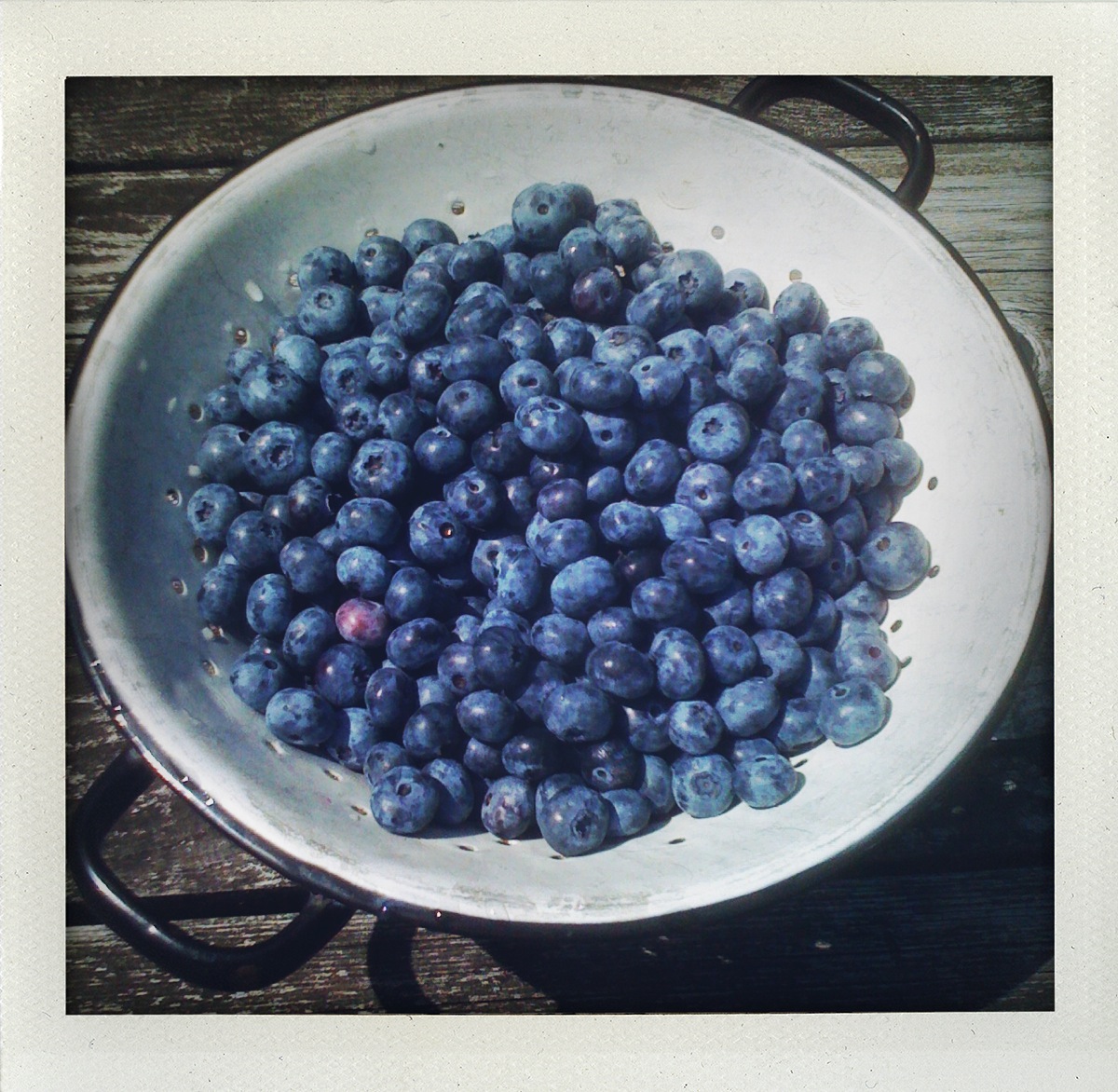
"Blueberries"

Besides, how is any sane person supposed to ignore all the farm stands, farmer’s markets, and bursting blackberry bushes in their own back yard? It simply can’t be done. So I succumb to the fruits. The peaches from Clarkdale Fruit Farm and Atkins Farm, the blueberries from Golonka’s and Quontquont Farm. I’ve even found a few farmers who have managed to keep harvesting local strawberries and raspberries. Plus the first crop of tart crisp Duchess apples are in. Then there is my own backyard where the blackberries are ripe and ready. It really is impossible to not make pies.

"Peach crumble a la mode"

Just so we don’t get into an argument I want to be clear that my definition of pie is pretty broad. I happily lump crisps and crumbles into the category of pies. If you’re a purist, I’m sorry. If you want more complete definitions I suggest Richard Sax’s book Classic Home Desserts chapter 1. Apologies and disclaimers out-of-the-way here are the two main ways I’ve been making pies this week.

"peach raspberry fruit base"

I have been making a variety of pies this past week. Blueberry Crumble, Peach Crisp, Blueberry-Raspberry-Peach Rustic Tart. I even did a crazy Peach-Raspberry-Blackberry-Blueberry-Strawberry pie which was pretty fantastic. All of them start with a Fruit Base. A fruit base is what the name implies – fruit with a little bit of sweetener plus a little bit of thickener. What are the proportions? I can’t really tell you since it varies from variety to variety. Blueberries have been pretty sweet this year so I have dialed way back on the sugar I add. The early peaches are so juicy I’ve actually not been adding all their juices since I don’t want to end up with Peach Soup Crisp. I’ve been thickening with a Tablespoon or two of flour, but I know some cooks who like to use cornstarch. With these simple summer pies I haven’t used tapioca, though you could. Tapioca tames fruit juiciness quite well. For drier fruit pies like apple I don’t bother with the thickeners (just keep that in mind for fall). Sometimes I add a smidge of cinnamon. Or a squeeze of lemon juice. The main thing I do is taste before I pour the fruit base into the pie plate or crust. Just a nibble to let me adjust things if I need to. I have been making smaller pies so the proportions are roughly as follows:

Fruit Base

4 cups fruit (2 pints)

3 – 7  Tablespoons sugar, brown or white

1 – 2 Tablespoons flour

1 – 3 teaspoons lemon juice (optional)

1/2 – 1 teaspoon cinnamon (optional)

If you are using peaches give them a 10 second dip on boiling water to help loosen their skins. Peel and slice. Otherwise dump the fruit in with the sugar, flour and any seasonings. Your sugar amount will depend on the sweetness of the fruit you are using. The flour will depend on the juiciness as well as how juicy you like your finished pie. I don’t like my pies so firm the filling can be sliced and not move, nor do I want them swimming in their own juices. It’s all about personal preference. Then it’s a matter of if you want your crust on the bottom or top. Crisps or crumbles have the fruit on the bottom and the “crust” on the top. Rustic pies are crust on the bottom with fruit on top.

"pie juciness"

In either case bake at 400º F for about 45-55 minutes until the fruit is juicy and bubbling and the crust or crisp is browned nicely. I suggest using a jelly roll pan to place your pie or crisp on just so you don’t end up with any overflow juices dripping onto the bottom of your oven where they will sizzle, blacken, and eventually set off your smoke detector.

"Peach blackberry crumble"

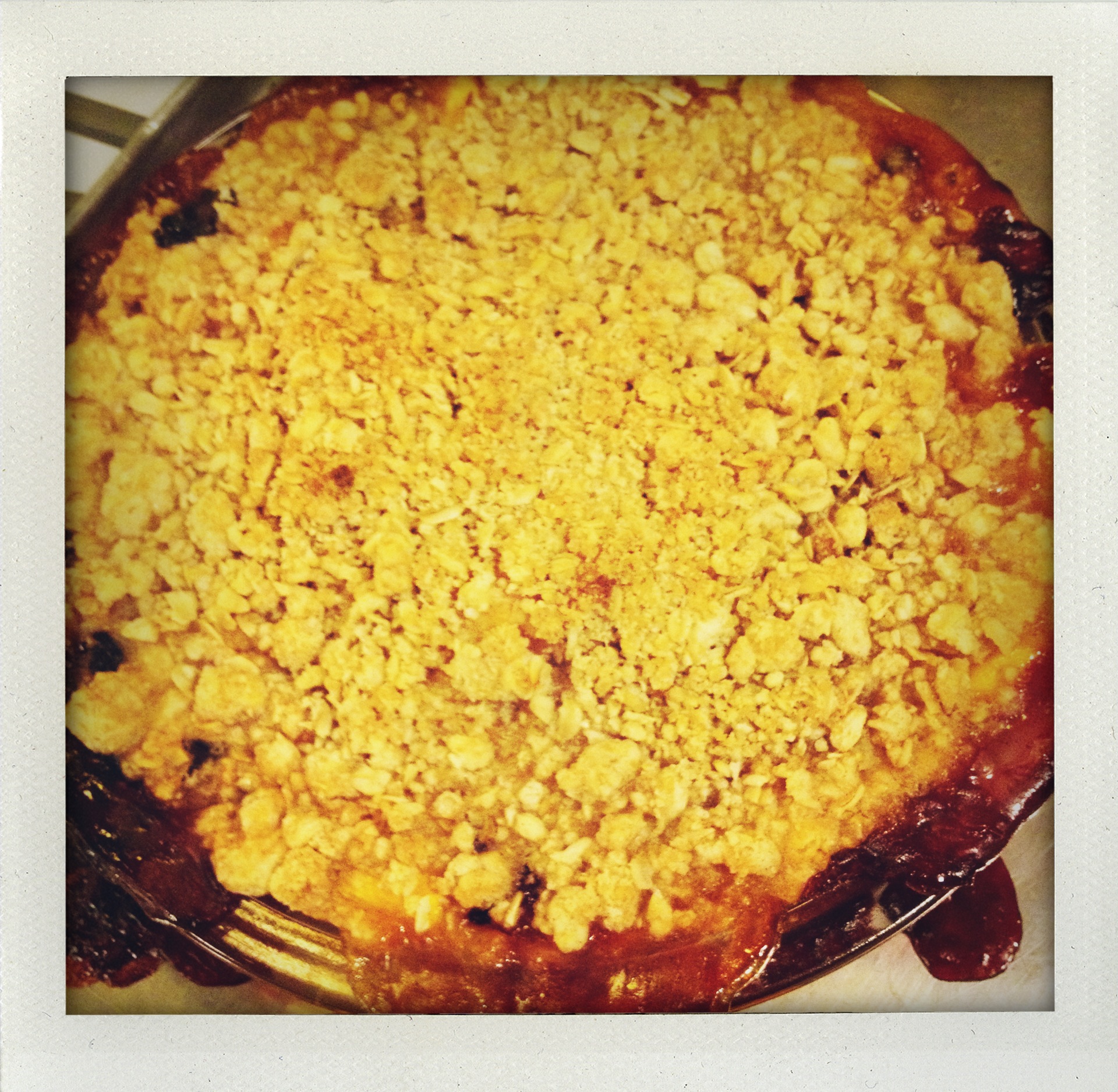
The easiest type of pie I make are crisps or crumbles. If you’re unfamiliar with them they are simply a fruit base plonked in a pie pan or some other vessel topped with a mixture of butter, sugar and flour which has been rubbed into crumbly goodness. When baked this results in a juicy fruit pie covered with crunchy, crumbly topping. Add some ice cream and you may be approaching heaven. My Mom is famous for her deep dish blueberry crumble, which was one of the first pies I learned how to make. Over the years I have tweaked the crumble/crisp topping by adding oatmeal. Occasionally I’ve even substituted the topping from Magnificent Muffins onto a pie since it is essentially a crumble topping. My friend Laura B. made us a fabulous mixed fruit and berry crumble a few weeks ago whose topping included almond slices and minced candied ginger. Delicious.

"a la mode"

Crumble Topping

3/4 cup flour

3/4 cup oatmeal

3/4 cup white or brown sugar

1/2 cup cold butter or margarine (if you are making this dairy free)

pinch salt

1/2 teaspoon cinnamon (optional)

1/2 – 3/4 cup sliced almonds (optional)

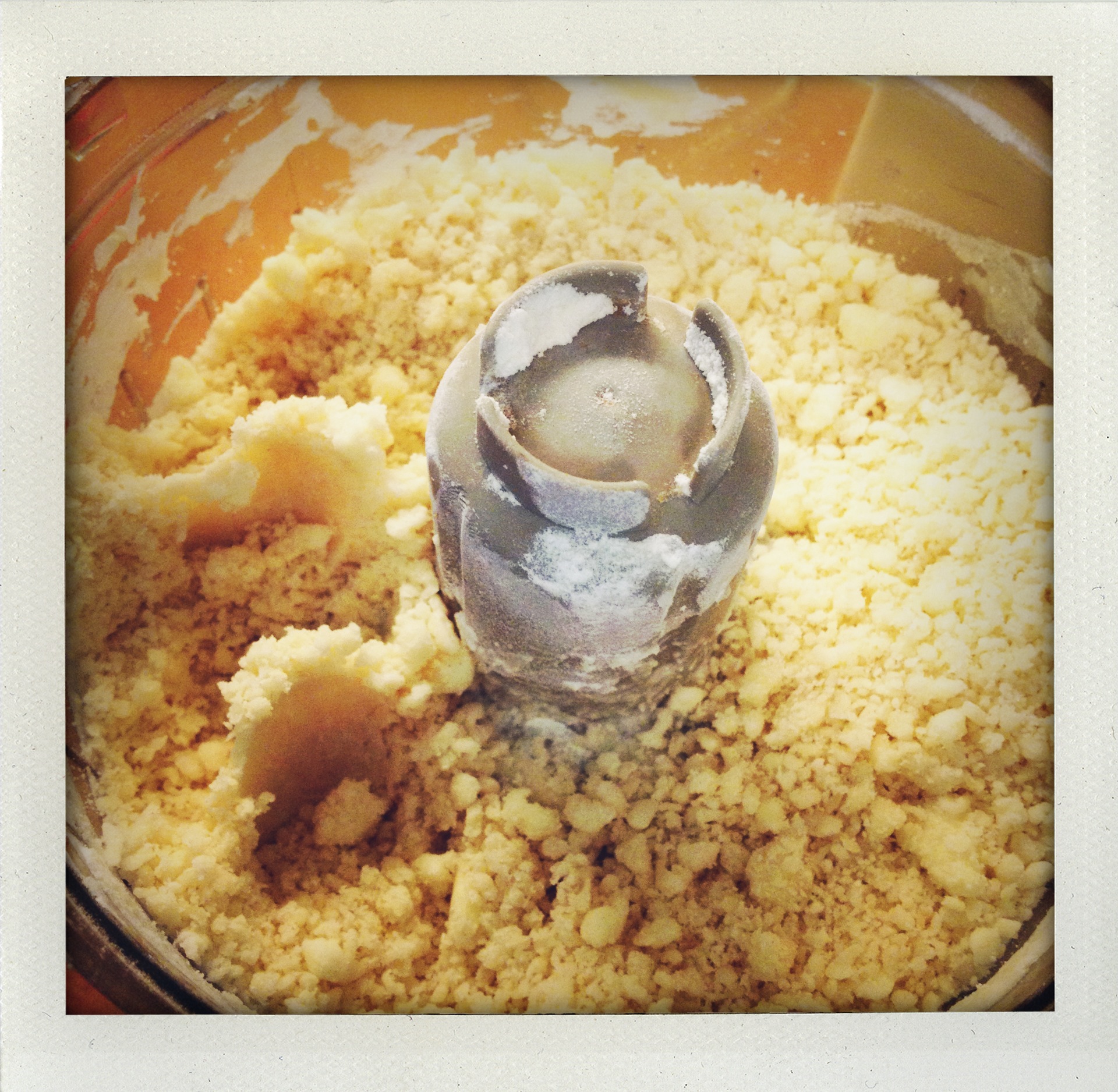
Dump everything into a bowl and then rub the butter into the dry ingredients with your fingertips. You’re not trying to melt the butter, but simply to coat little chunks of butter with flour and sugar. You could do this with two knives or a pastry cutter. The mixture should be, as the name implies, crumbly. Nice fat crumbs the size of peas to small raspberries. I don’t recommend doing this with a food processor since the likelihood of over-processing is high. Also I tend to make this in the bowl I tossed the fruit in which serves two purposes. One it gives you less mess to clean up. Two it soaks up any lingering fruit juices that you didn’t get into the fruit portion of your pie. For the smaller pies you won’t use all this crumble topping. If you make a 9″ pie you will probably use it all. Depends on how thick you like your crumble. Bake as directed above, but don’t forget the jelly roll pan or you may have spillage in your oven.

* Now here’s a secret – you can make double, triple this amount of crumble topping and freeze it! Then any time you feel like pie, simply toss your fruit in some sugar and flour, pull out your crumble topping and sprinkle on a few handfuls and pop it all into a hot oven. Easy peasy!

"Laura's Mixed Fruit Crumble"

Rustic pies  are so much fun because you don’t bother with a pie plate, you just roll out the dough, plop the fruit on top, fold up the edges, and bake. They are elegant in their simplicity and I adore the fruit to crust ratio. The one draw back can be that pie dough scares some people. It shouldn’t but it does. Here’s some advice – #1 don’t over handle,  #2 think flaky and crispy, #3 stop worrying. The don’t over handle part is key. This isn’t bread dough so don’t knead it. If you use a food processor don’t let the dough form a ball in the processor. Over handling makes pie dough tough. My second point is using two fats. An easy to incorporate fat like vegetable shortening or lard combined with a tasty fat like butter. If you want to read more about flaky pastry I recommend the Pies & Tarts chapter of the 1997 edition of Joy of Cooking edited by Maria Guarnaschelli.

"Peach rustic pie"

Rustic Pastry

1 cup flour

2 Tablespoons cold butter

2 Tablespoons vegetable shortening

pinch salt

2 teaspoons sugar (optional)

2 Tablespoons ice-cold water, more or less

I like to make my pie dough in a food processor. I put the flour, sugar and salt in and pulse once. Then I add the butter and vegetable shortening and gently pulse. Do NOT switch it on. You are looking for crumbly pea size chunks of fat. Dribble on your water and pulse twice more. Give your dough a pinch. If it holds together dump it all out onto a piece of plastic wrap. If it doesn’t hold together dribble on a bit more water and pulse twice more. Once the dough is on the plastic wrap I squeeze it together with my hands, wrap it up, and pop it in the fridge. Do NOT knead. Let the dough chill and relax for a couple of hours or up to two days. This should be enough dough for the fruit base above. If you are serving a large number of people or you bought a lot of fruit double the recipe. After it has chilled roll it out on a floured surface making sure it isn’t sticking. Then roll the dough onto your rolling pin and lay it out on a parchment paper lined jelly roll pan. The dough may hang over the edges, don’t worry since you will fold it up after the fruit is on. Dump on your fruit base and fold up the edges. I often sprinkle the crust with some cinnamon sugar or coarse sugar for a little sweet crunch, but it’s optional. Bake as directed above. I often serve my Rustic Pies on wooden cutting boards.

"Pie dough pinch test"

This was a pretty epic post for something as simple as pie but I’m hoping that by sending it out on Wednesday you’ll be inspired to make some dough or crumble topping today, pick up some fruit tomorrow, then make some pie on Friday (Pie Day).

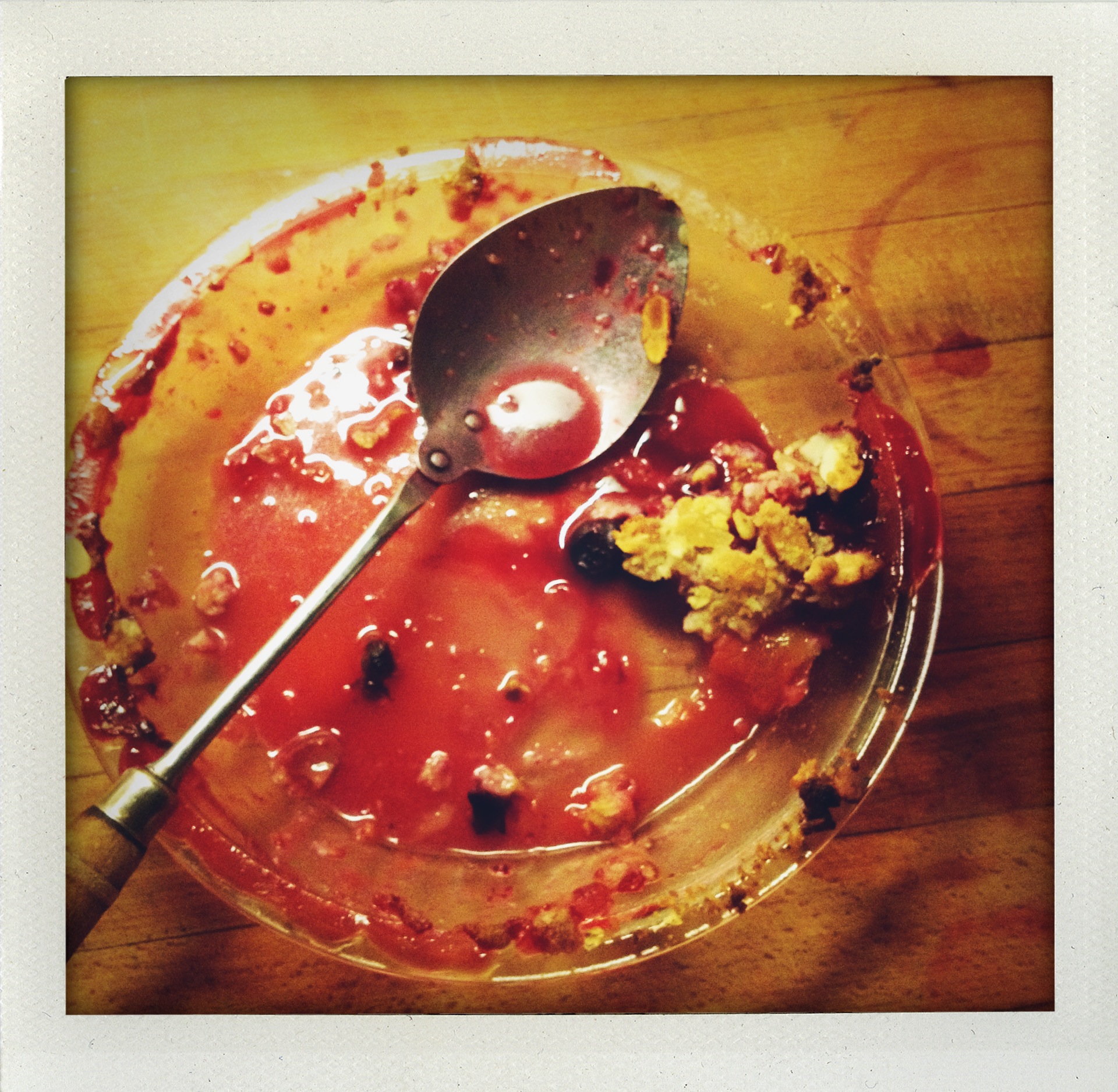
"all gone"

I’d love to hear what your favorite fruit and crust combination is.

8 Comments

Filed under 50 Recipes

Chive Talking

I am an unreliable gardener. Sometimes I lavish my plants with all the love and water they deserve, while other times I ignore and neglect them horribly. I like the idea of a garden, but somehow lack the day-to-dayness necessary to have anything that approaches magnificent. It’s one of those ugly truths you have to sometimes acknowledge about yourself. The conundrum is I love having plants and flowers around, and I have a pretty green thumb – I just need the kind of plants that can take care of themselves. My mom tries to let me off the hook by saying that I’ll have time for gardening when the kids are grown. Perhaps. We’ll see.

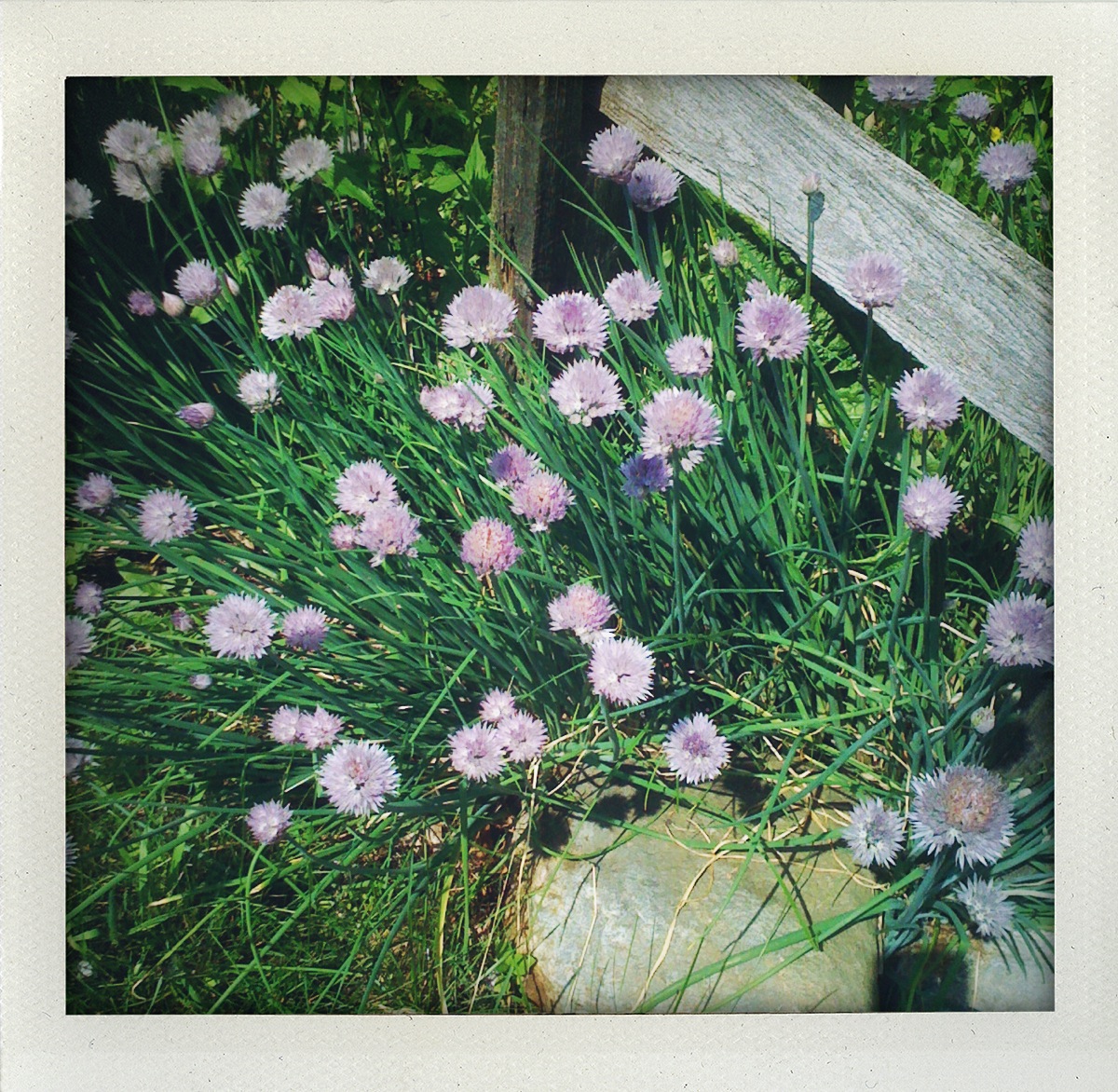
"chive blossoms"

Chive blossoms

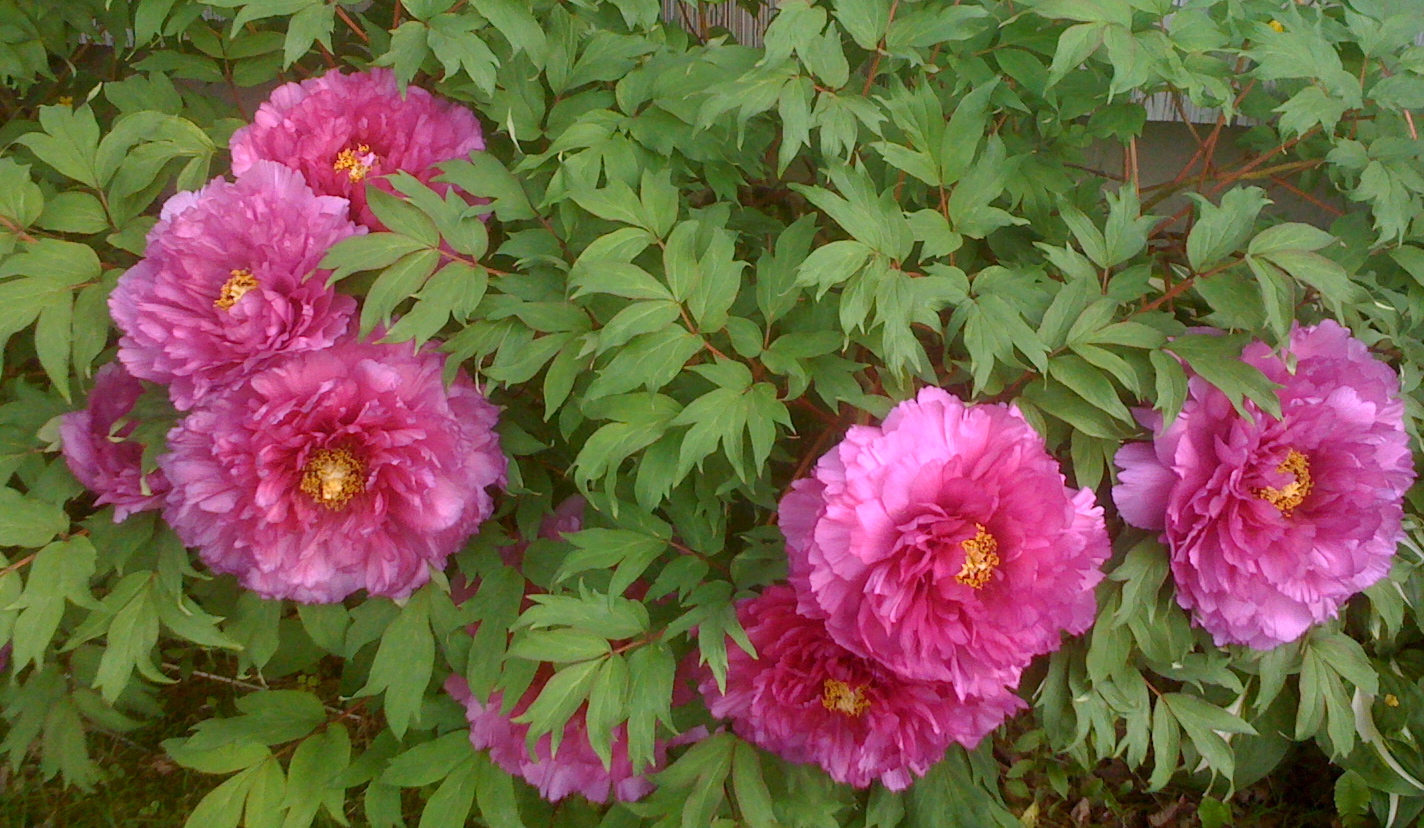
I have several plants that thankfully fall into the category of no maintenance. A flamboyant hot pink tree peony which came from my Grammy Thompson’s house on Grand Street in Croton. Some scented geraniums my Mom gave me, which I love dearly since they are the first things up in the spring and the last to go each fall. Hostas, bleeding hearts, and ferns also fall onto my delightful list of  “Don’t worry about us, we’ll take care of ourselves” plants.

"Grammy Thompson's tree peony"

Grammy Thompson’s tree peony

In my garden beds the list of no-to-low maintenance edibles include garlic, rhubarb, and chives. Chives grow like weeds, which is a good thing since we love to put them in everything. Russell mixes chives into cream cheese to smear on his bagels, Isabelle sprinkle them on top of her scrambled eggs, I stir them into soups and put a generous handful into my Grammy Caldwell’s Potato Salad.

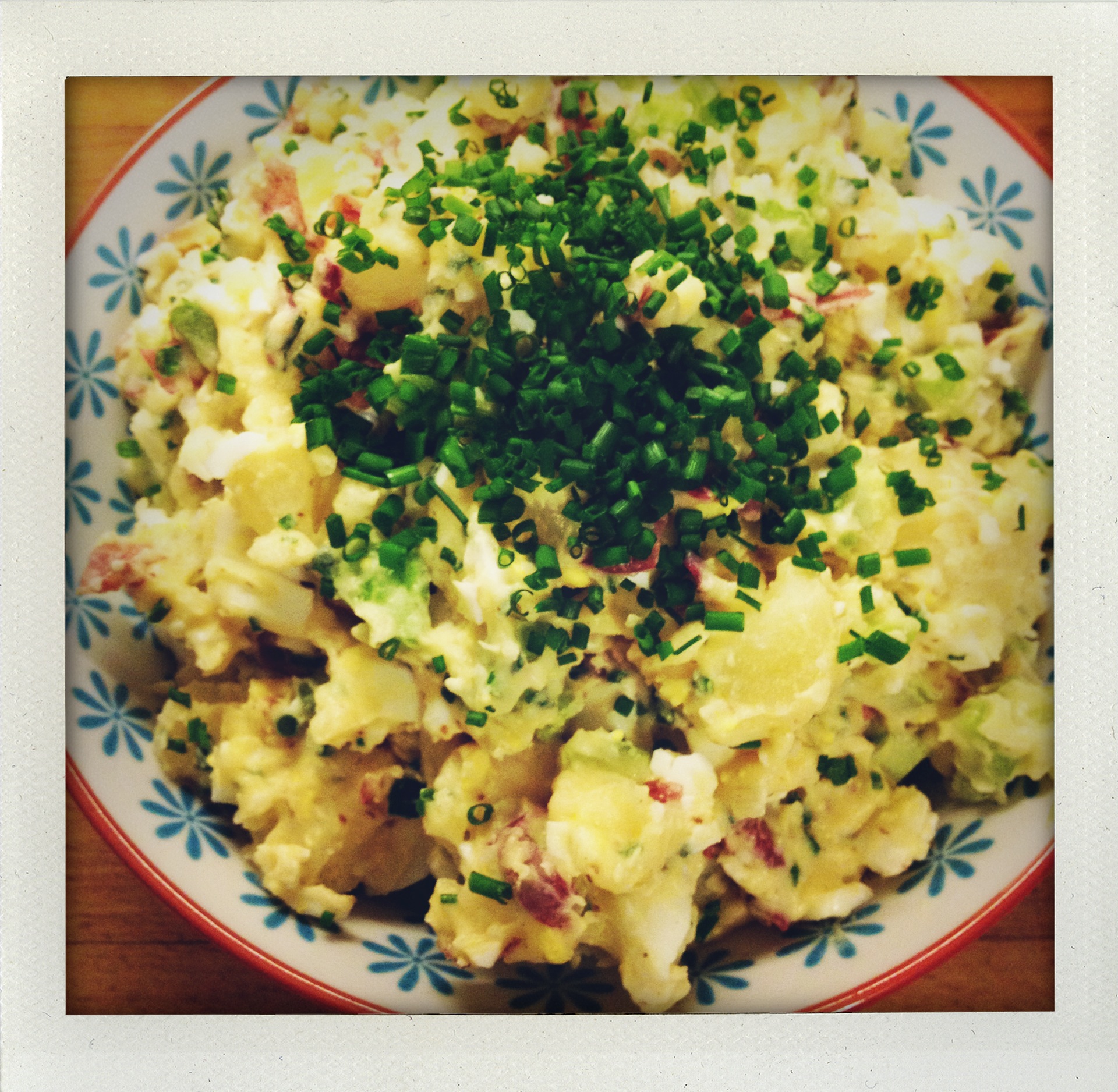
"Grammy Caldwell's potato salad"

Grammy Caldwell’s potato salad

Grammy Caldwell always had chives in her garden. Even when she moved out of her house on Strathmore Drive and into an apartment, there would be pots of the tall, slender herb growing along her terrace. Chives are one of the essential ingredients for her potato salad. As a result they were one of the first plants I bought for our garden and every spring they are there to greet me. This year I even dug up a bunch to give away, they’ve become so abundant.

"chives potted up to give away"

Ready to give away

One of the quirks I remember about Grammy and her signature potato salad was she would scoop out a serving for my brother Jay and set it aside before she added the chopped hard-boiled eggs. I’m not sure why she did this since she rarely catered to people’s eating whims. Grammy turned my cousin Steve’s refusal to eat green peas into a family joke. Grammy had taken Steve (and probably his siblings) out to eat at Edward’s Tea Room. When they were served their food my cousin flatly refused to eat any of his peas. Grammy (who was a big believer in trying things)  asked little Stevie what he didn’t like about green peas. He replied, “Well Gram, I don’t like the insides and I don’t like the outsides.” She laughed every time she retold the story, yet she didn’t not serve green peas to the rest of us just because Steve thought they were icky. Somehow though there was  always one portion of potato salad without eggs.

I’ve modified her classic potato salad a bit. I use a different mayonnaise, despite Grammy’s insistence that Helman’s was the best. I don’t bother peeling the potatoes, but otherwise I do as she taught me. I boil the potatoes whole and then cut them into bite size chunks, usually singeing my fingers as I do so. I dribble the cider vinegar over them while they are still hot so they can soak it in better. And I always add a generous amount of chives.

Grammy Caldwell’s Potato Salad

4 pounds potatoes – I use small red ones, but any boiling potato would do

2-3 Tablespoons cider vinegar

2 Tablespoons dijon mustard

1/2 – 3/4 cup mayonnaise, or to taste

3 ribs celery, chopped

4 hard-boiled eggs*, peeled and chopped

salt to taste

1/3-1/2 cup minced chives

Boil the potatoes until you can pierce them with a knife. Drain and cut into bite size pieces. If you want to be like Grammy you can also peel them. Drizzle the cider vinegar over them and toss, I also add the mustard at this point. Let them cool before mixing in the mayonnaise, celery, hard-boiled eggs, salt and chives. Mix together and either serve immediately or refrigerate.

"Grammy Caldwell's potato salad with lamb and green beans"

Grammy’s potato salad with grilled lamb and wax & string beans

*I use the Julia Child method of hard boiling eggs. Cold water to cover, bring to a boil, turn off for 17 minutes, rinse in ice water for 2 minutes, back to boiling water for 30 seconds, cool again and peel.

Leave a comment

Filed under 50 Recipes